From WhatsApp and Excel to a unified dashboard.
Discovery Assessoria is a consultancy specialized in European dual citizenship, serving families seeking Italian, Spanish, German, or Portuguese recognition. Each case is a web: hundreds of documents, dozens of people mapped across family trees, deadlines, sworn translations, and filings spread between town halls, courts, churches, and consulates across Europe.
Before the Discovery System, this web was managed across a mosaic of disconnected tools — WhatsApp groups for clients and staff, shared iCloud folders, Excel spreadsheets, physical and digital documents scattered everywhere. All important information existed somewhere; none of it was in the same place.
The system was born to bring it all into one platform. Today it's the daily working environment of Gabriel, Marco, and Discovery's team, plus external contributors collaborating on specific cases.
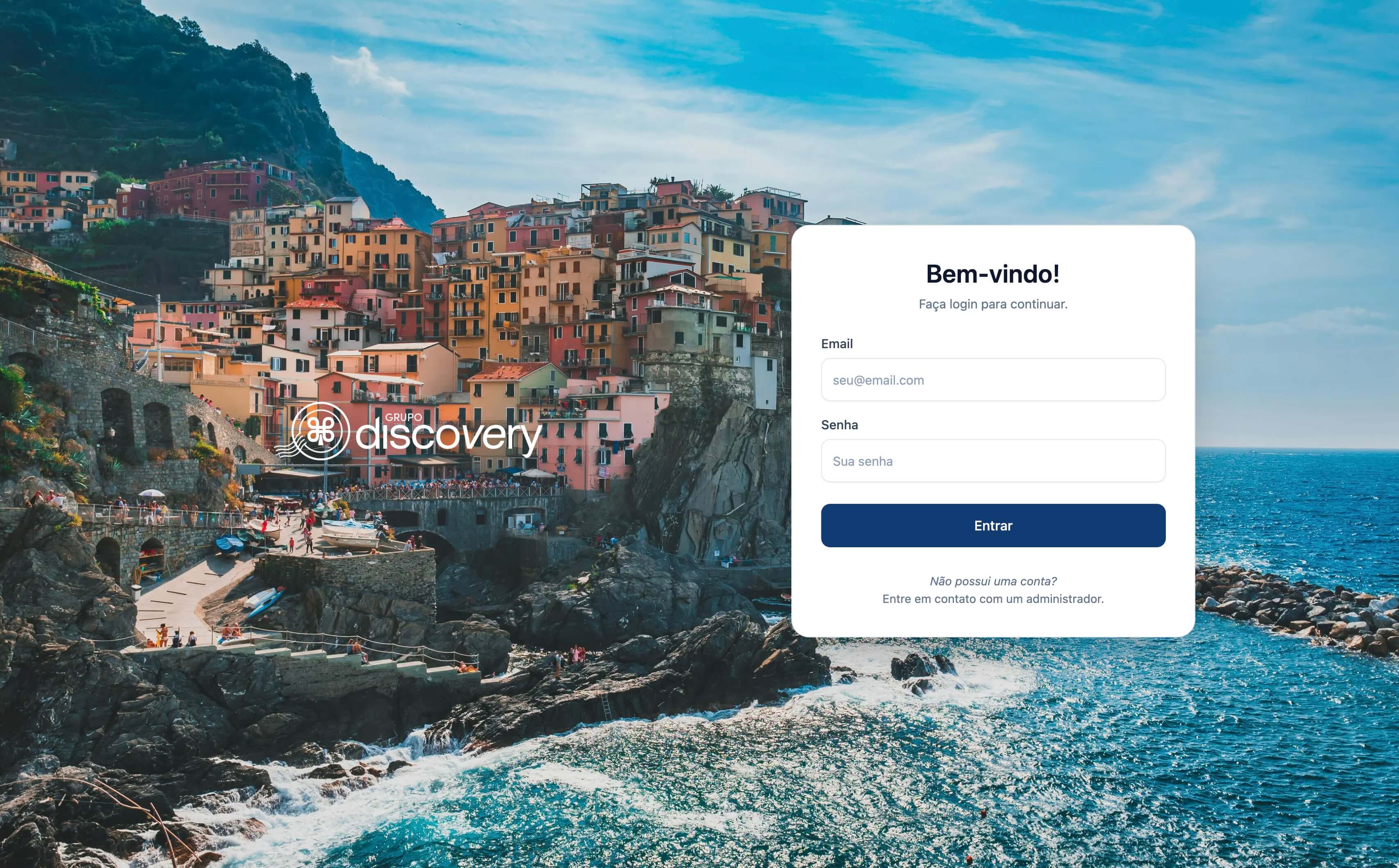
Everything starts at login. The Cinque Terre image isn't decoration — it's anticipation. Discovery sells an Italian dream, and the client steps into it before typing a single character.
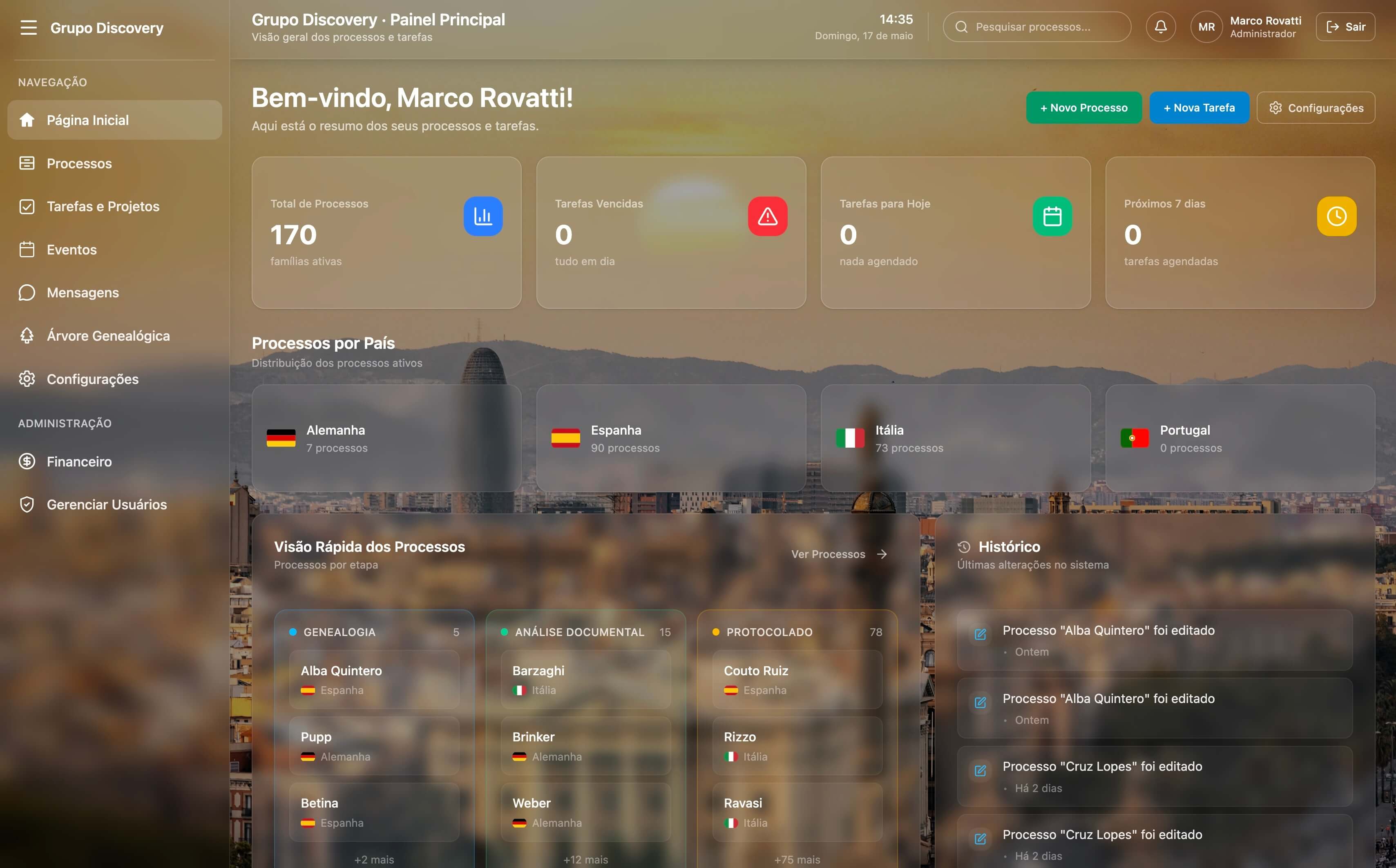
After login, the dashboard. A bird's-eye view of active families, critical deadlines, pending messages. The point from which any path inside the system is possible.
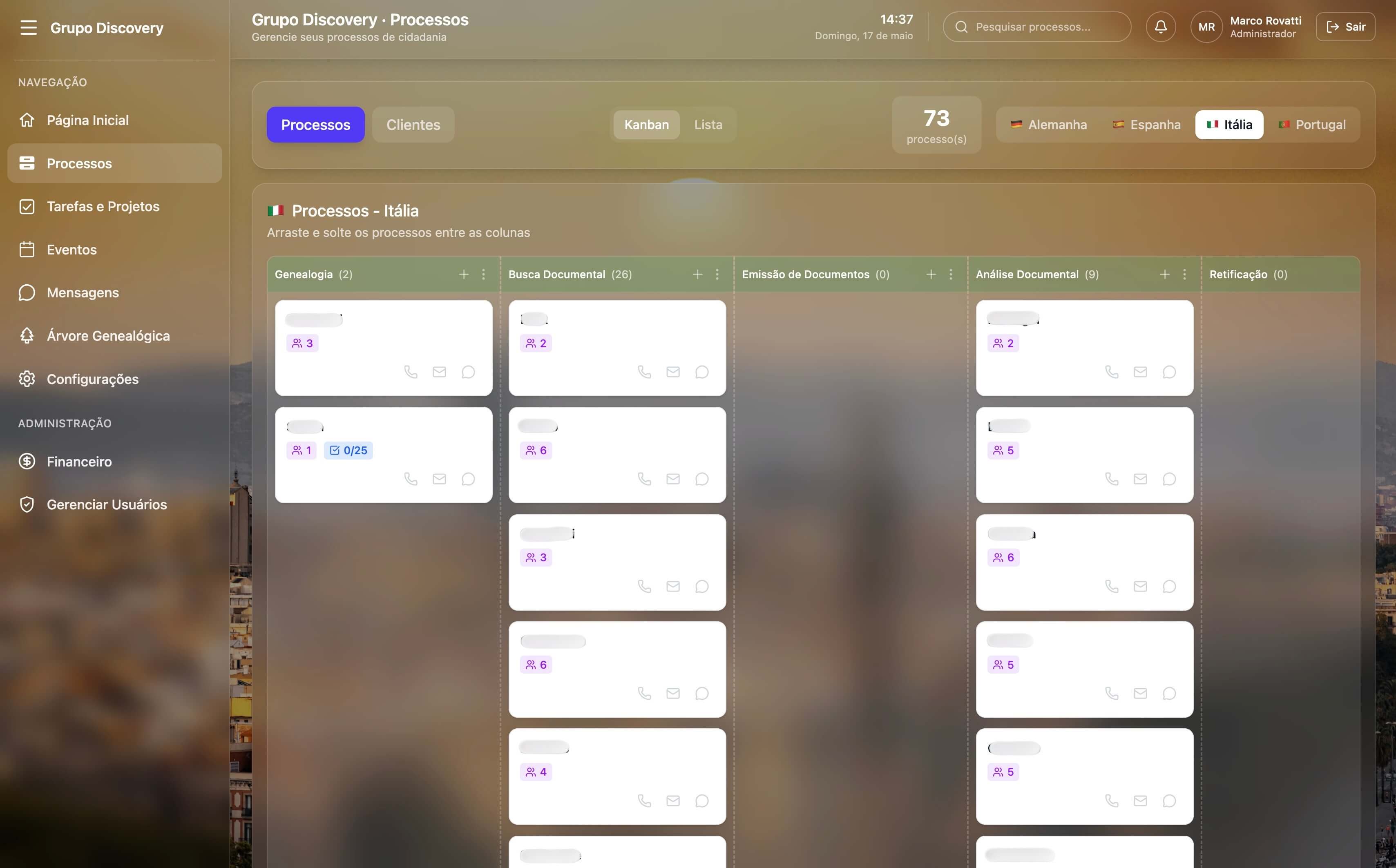
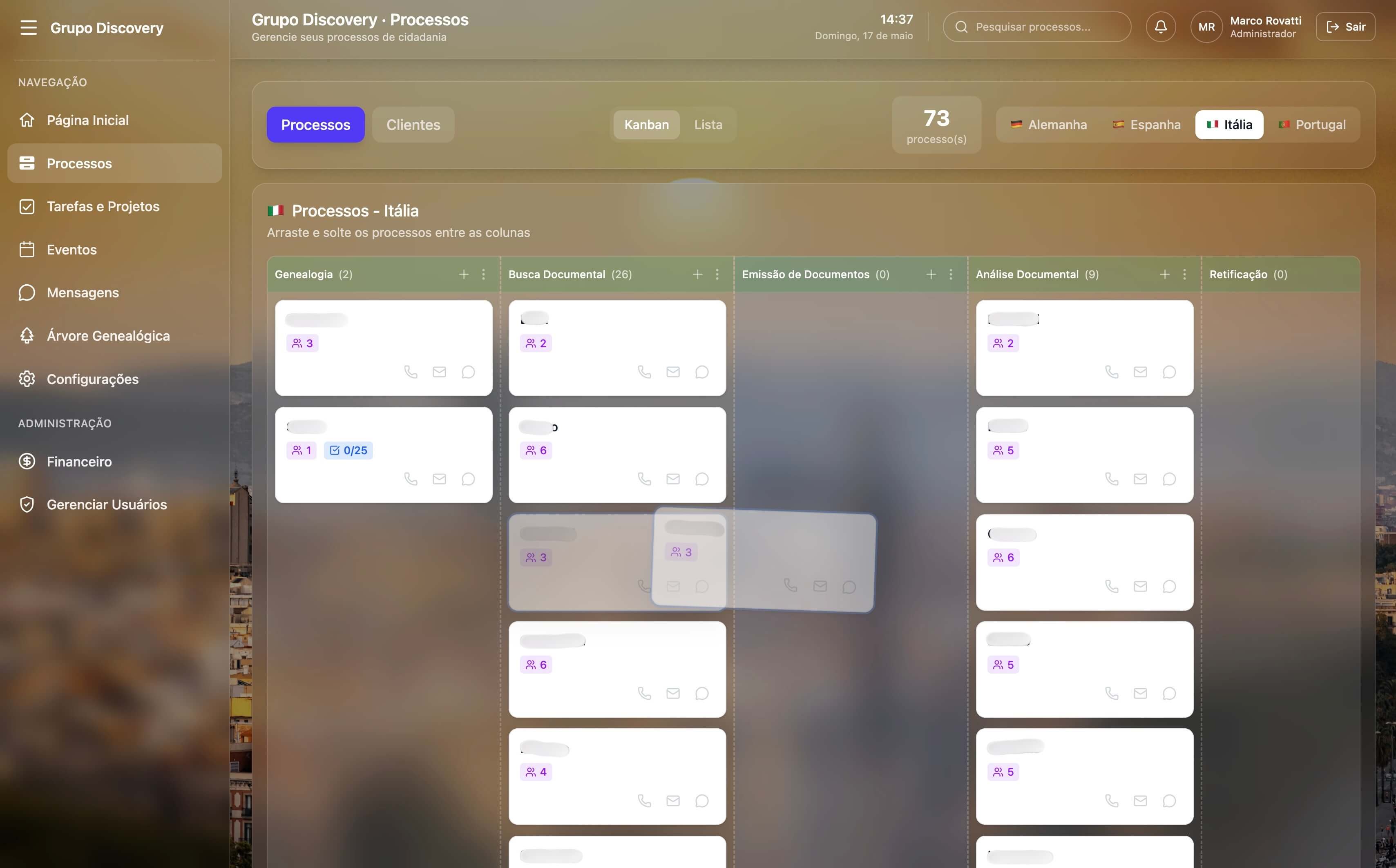
Each family with a citizenship case becomes a process. The kanban is where all processes live, organized in columns representing the stage each one is at. It's the most-used screen in the system — where Gabriel, Marco, and the team spend most of their working time.
Each process opens in layers. Cards detail applicants, documents, deadlines. Activities and sub-activities break the work into smaller units — because a citizenship case isn't one thing, it's hundreds of small things in sequence.
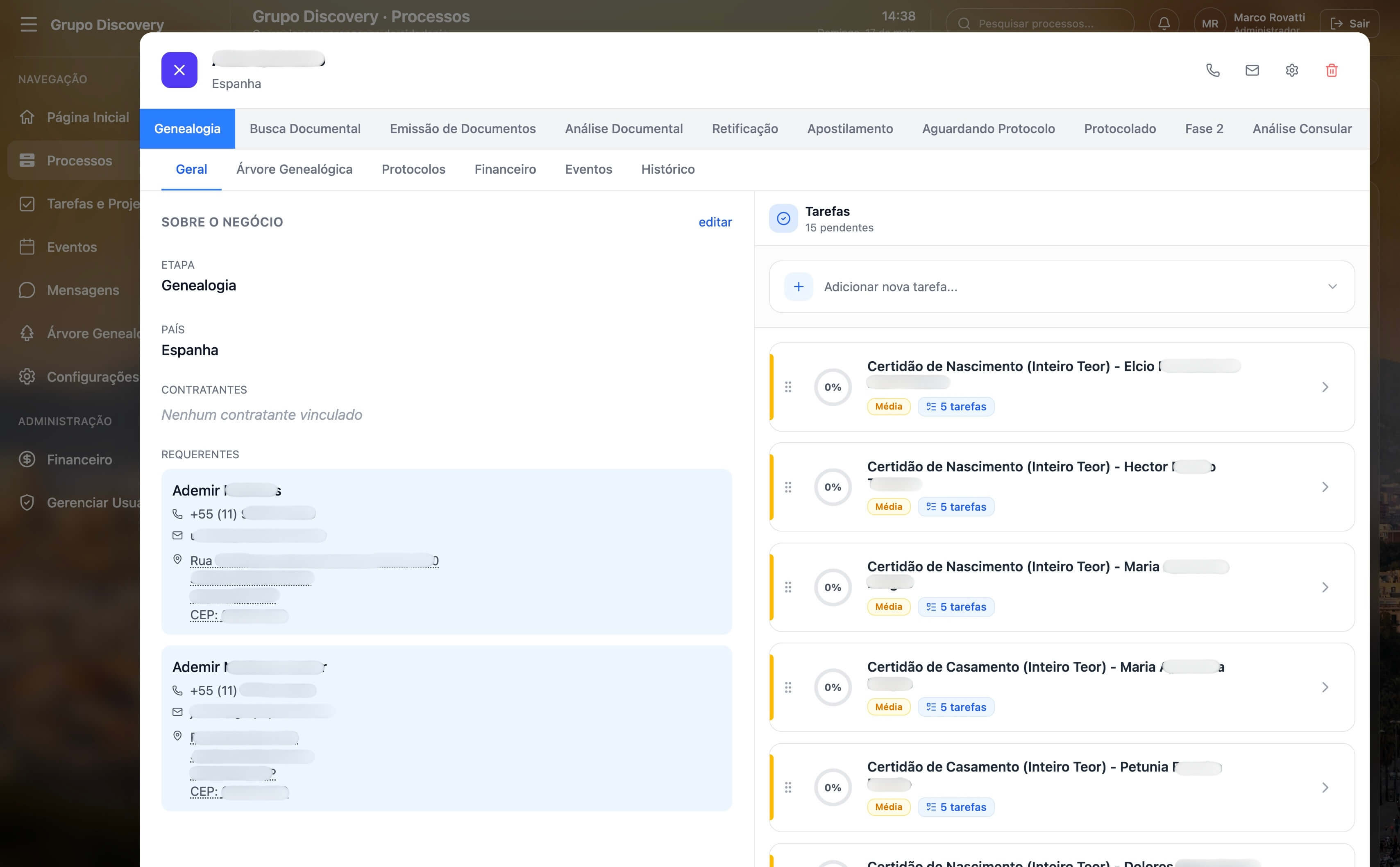
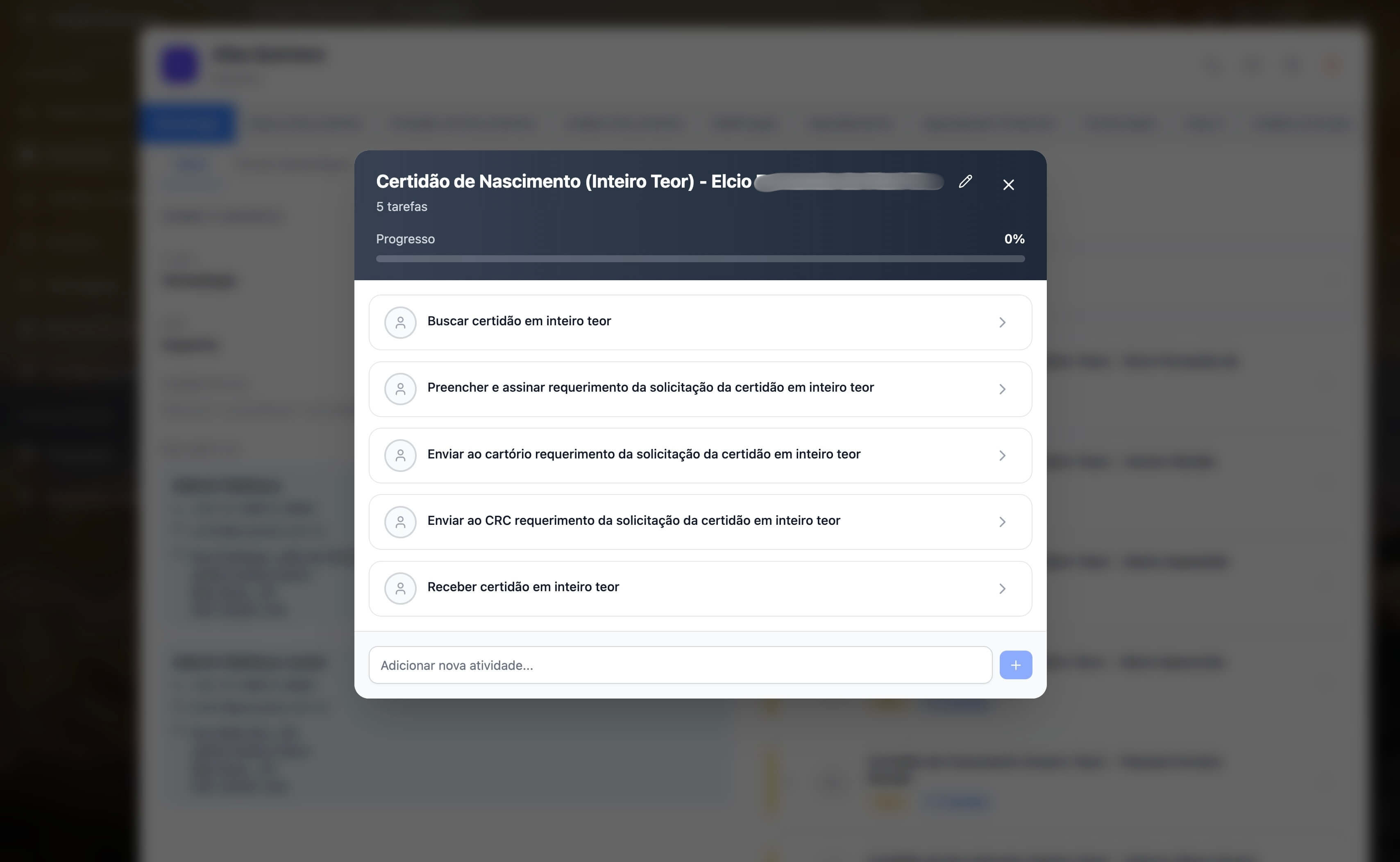
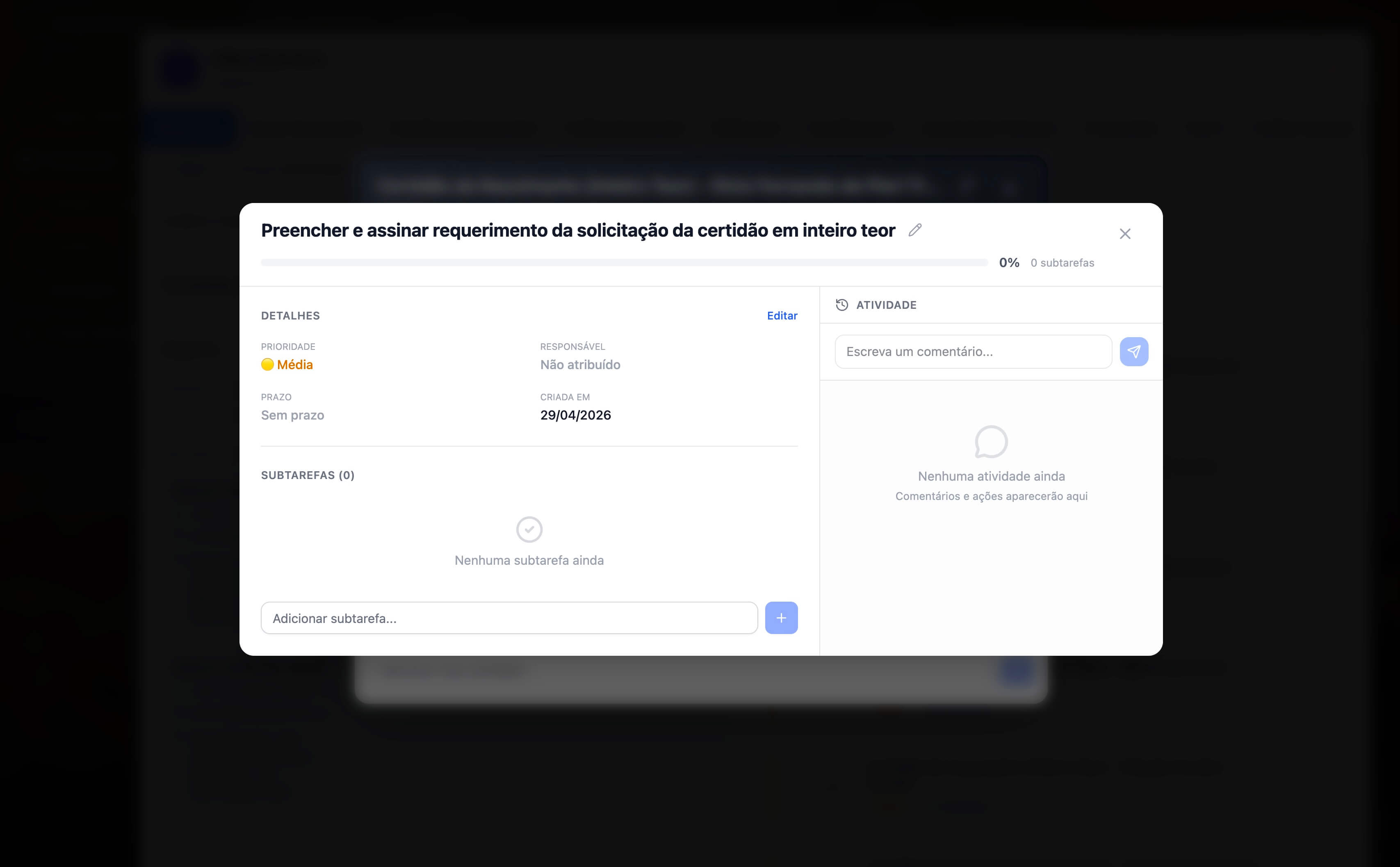
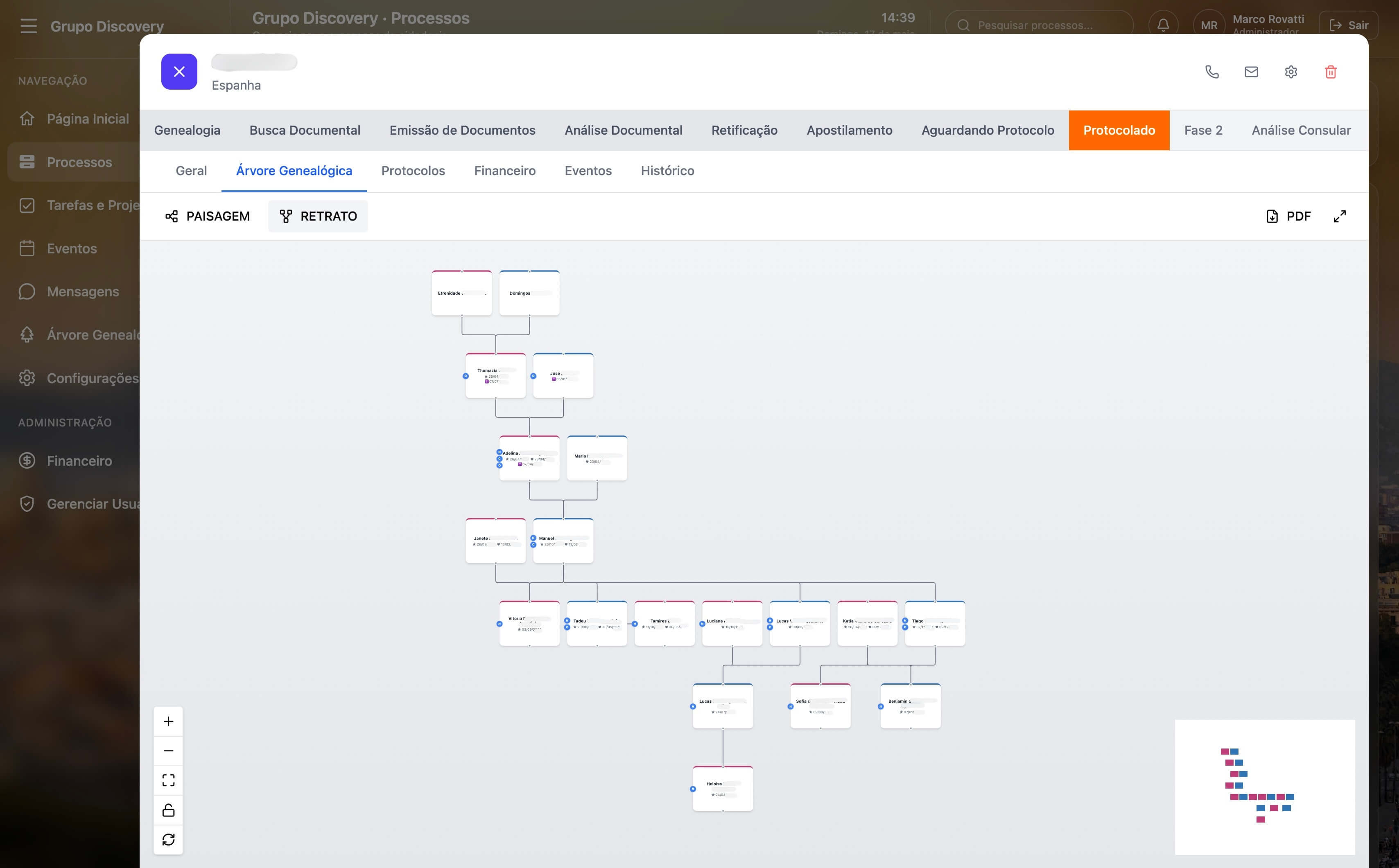
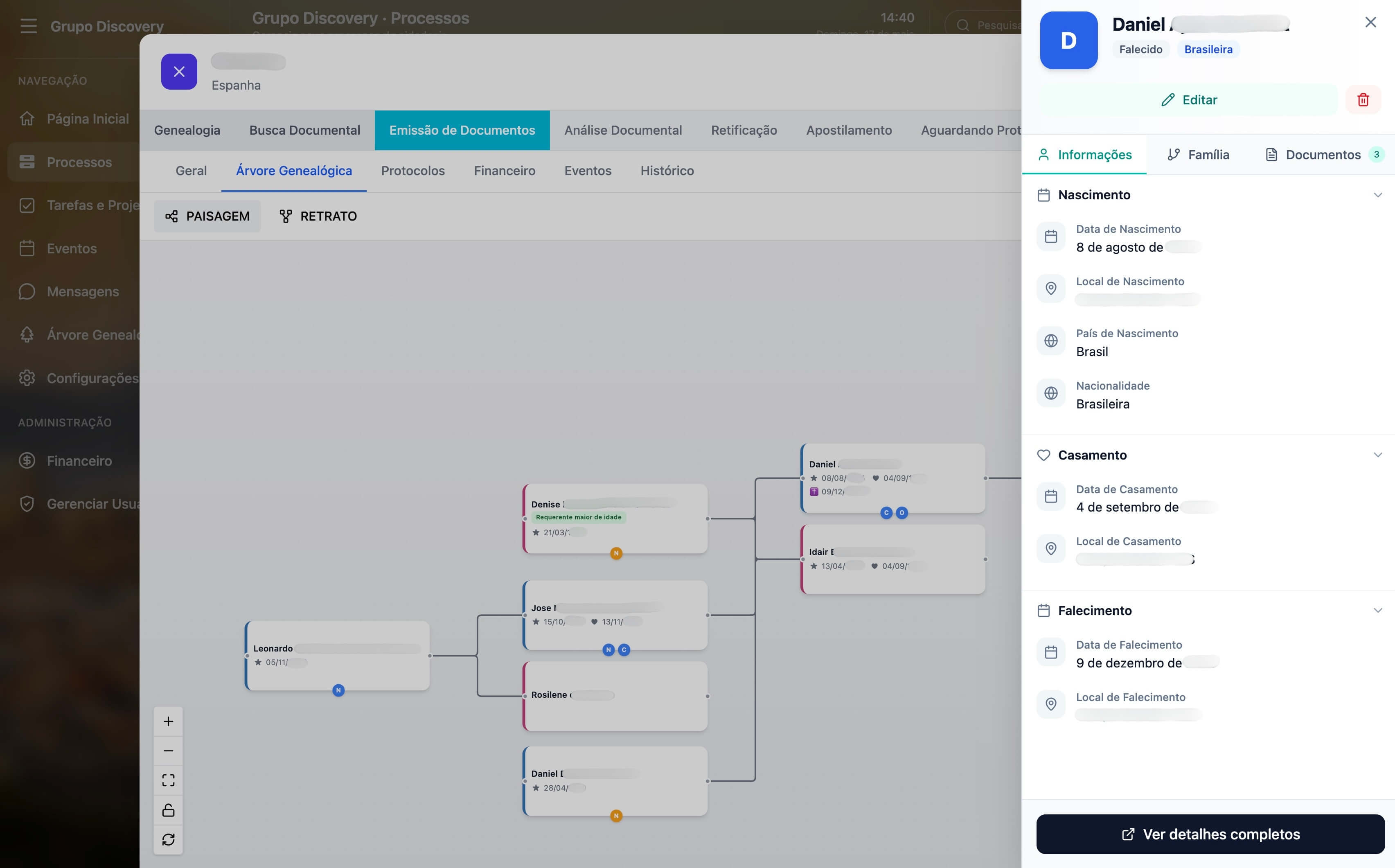
The family tree lives within the process. Not as a separate module. Each process carries its own tree, mapping descent to the European ancestor. Linking documents to people, connecting generations, identifying the gap — all in the context where it makes sense.
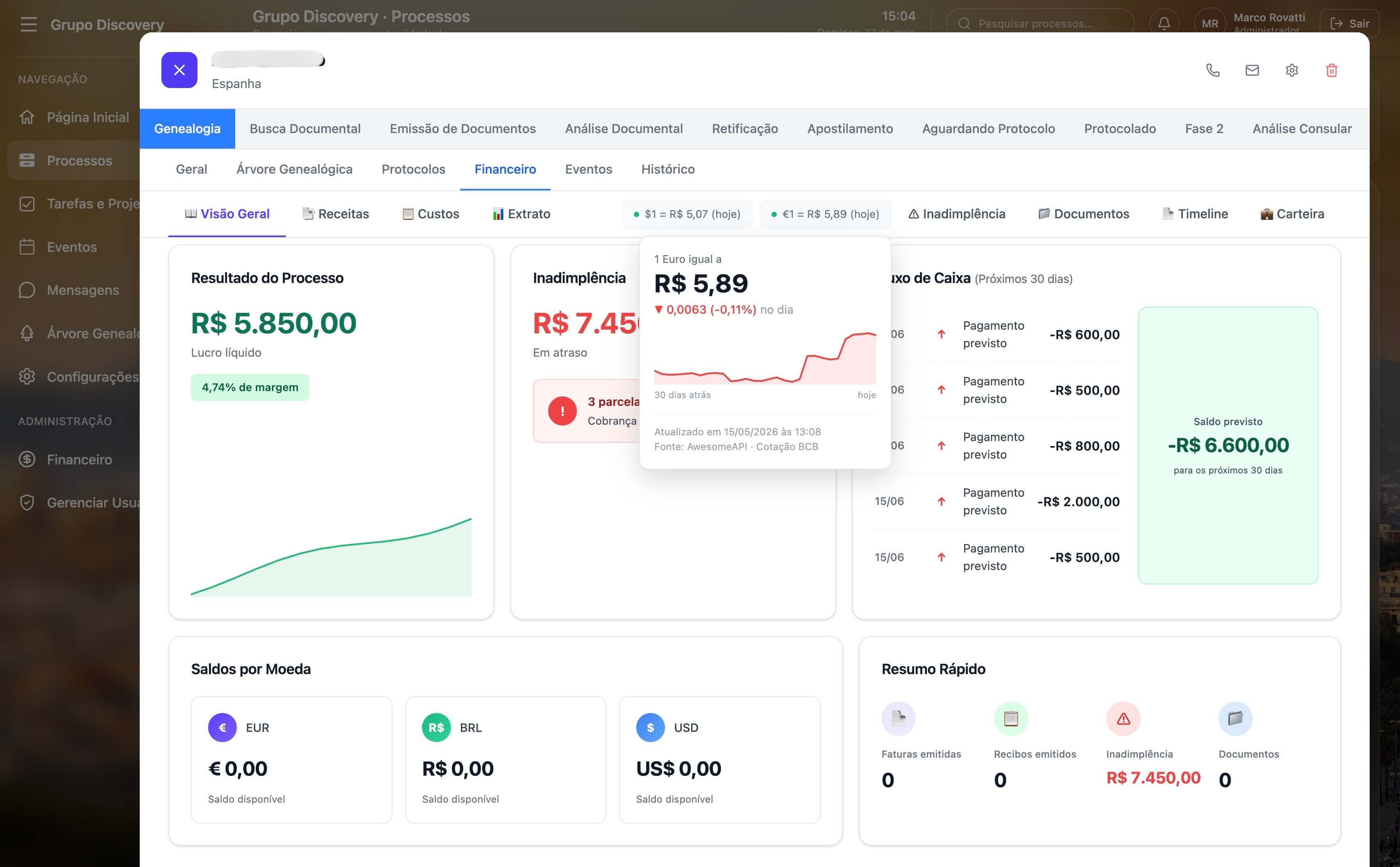
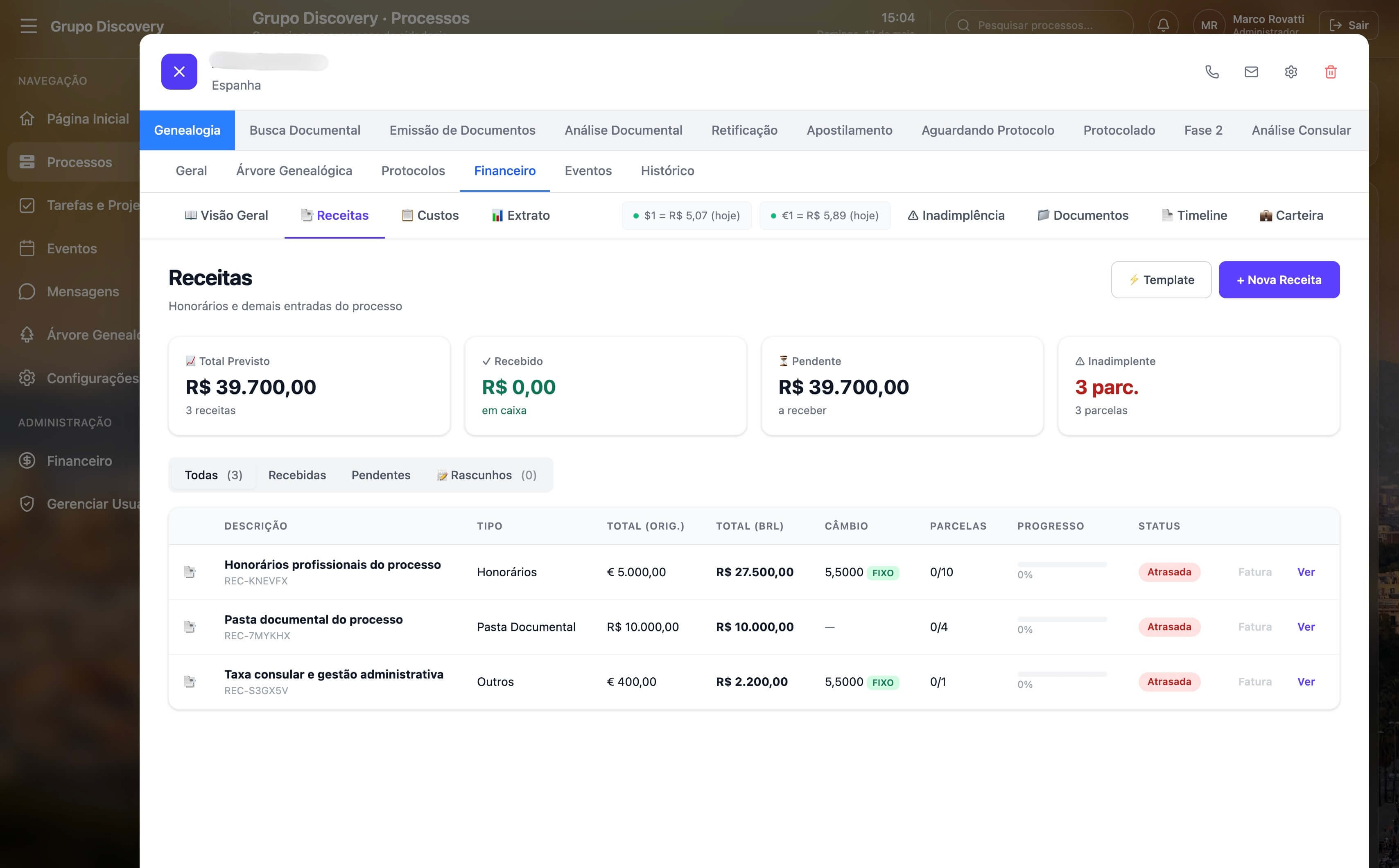
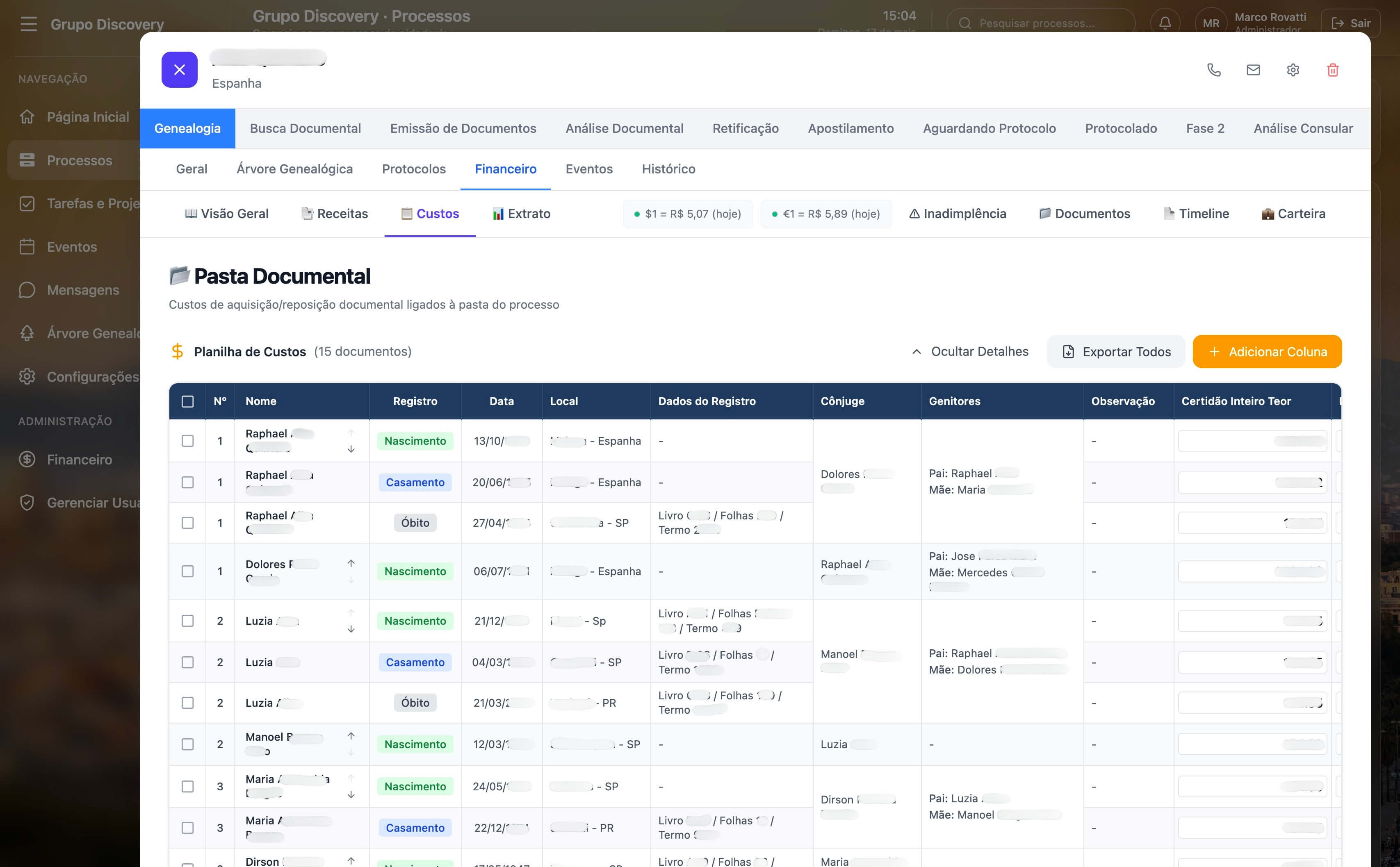
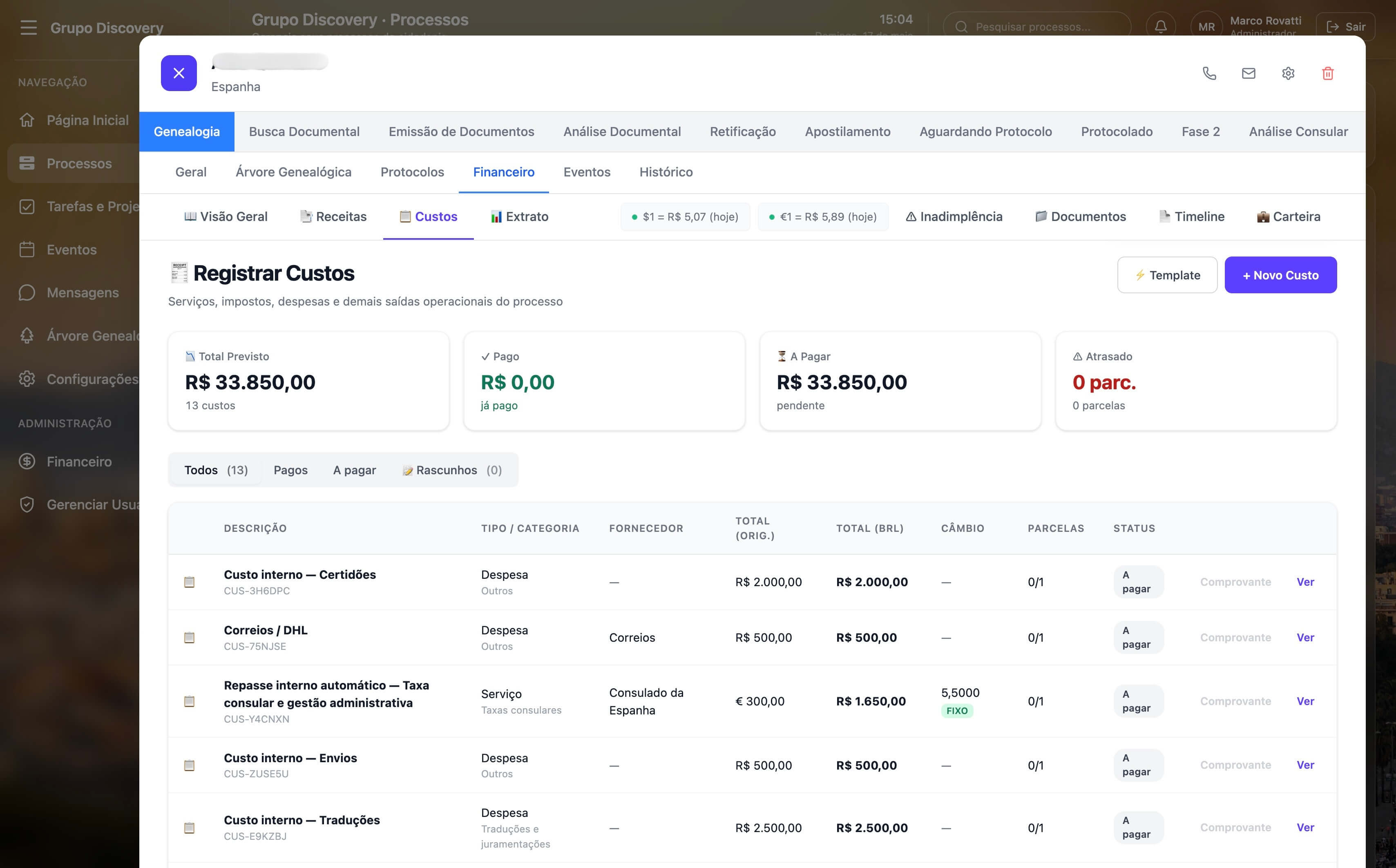
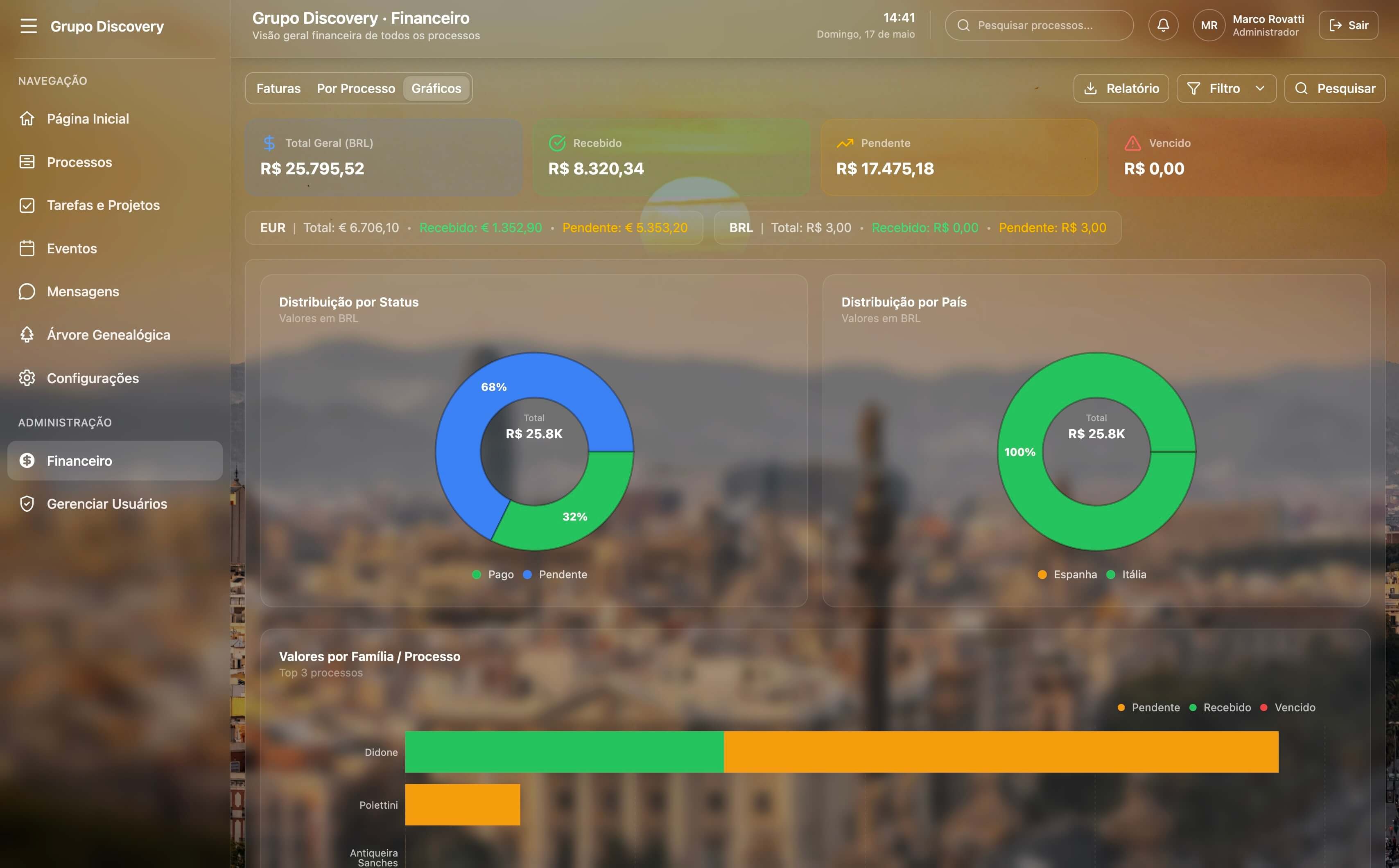
Finance is also part of the process. Each one has its revenue (client installments), its costs (fees, translations, European agents), and its balance. All in original currency and BRL equivalent — because the client sees the price in reais, but the real operation happens in euros.
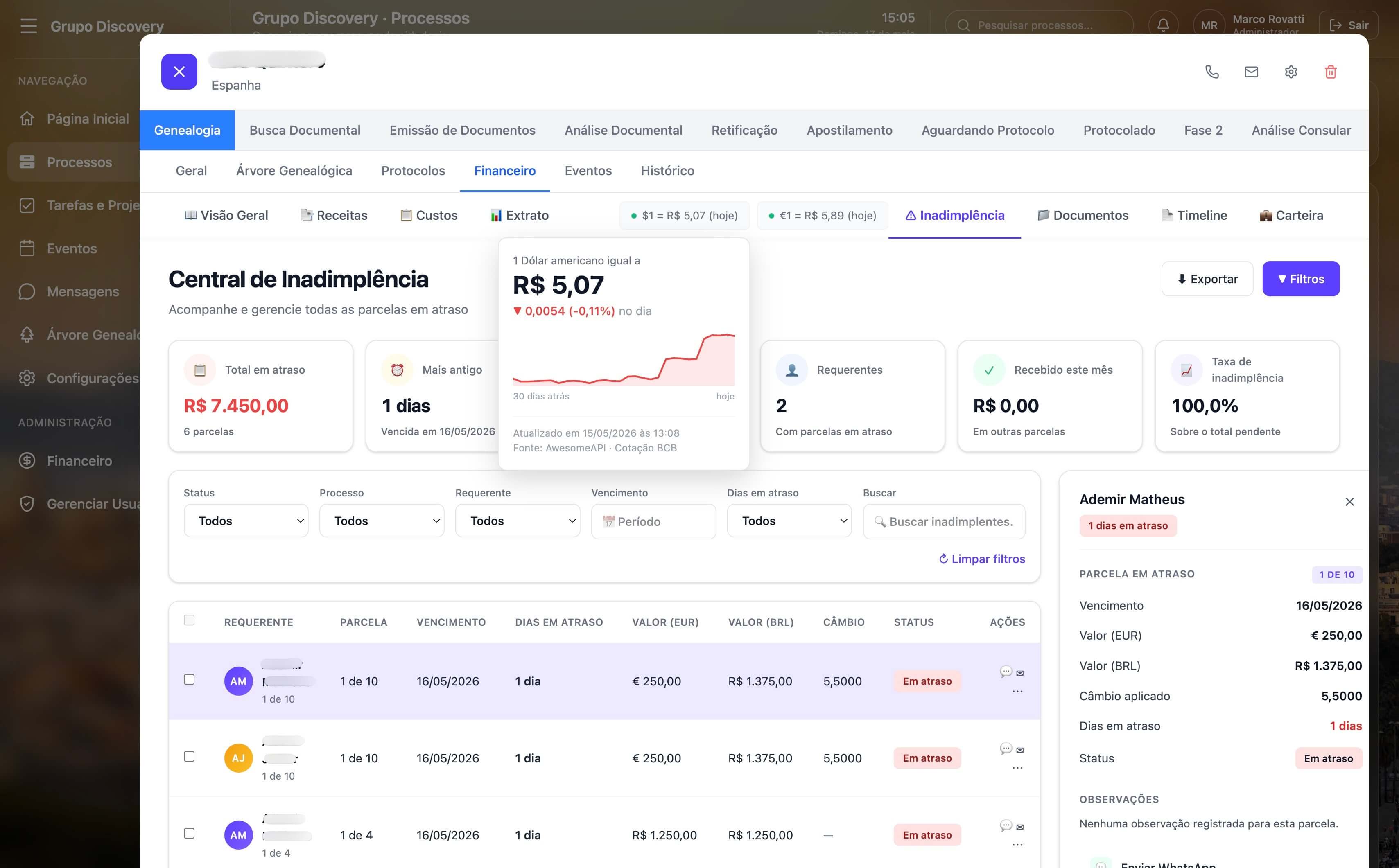
The Brazilian Central Bank API feeds real-time BRL/EUR and BRL/USD rates. Since exchange rates shift daily, you can't close an invoice with yesterday's quote. Tooltips, reports, and dashboards consume directly from the source.

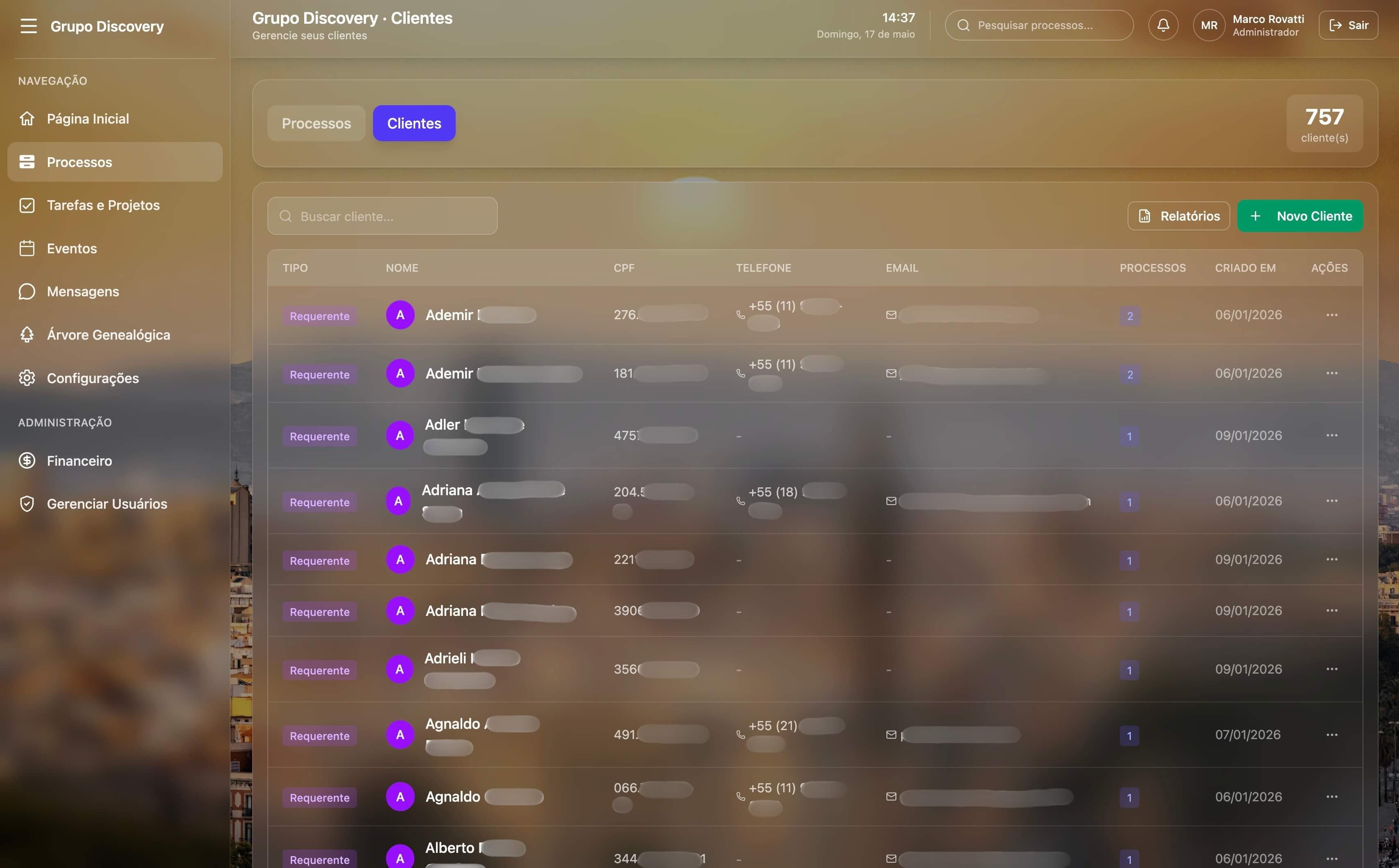
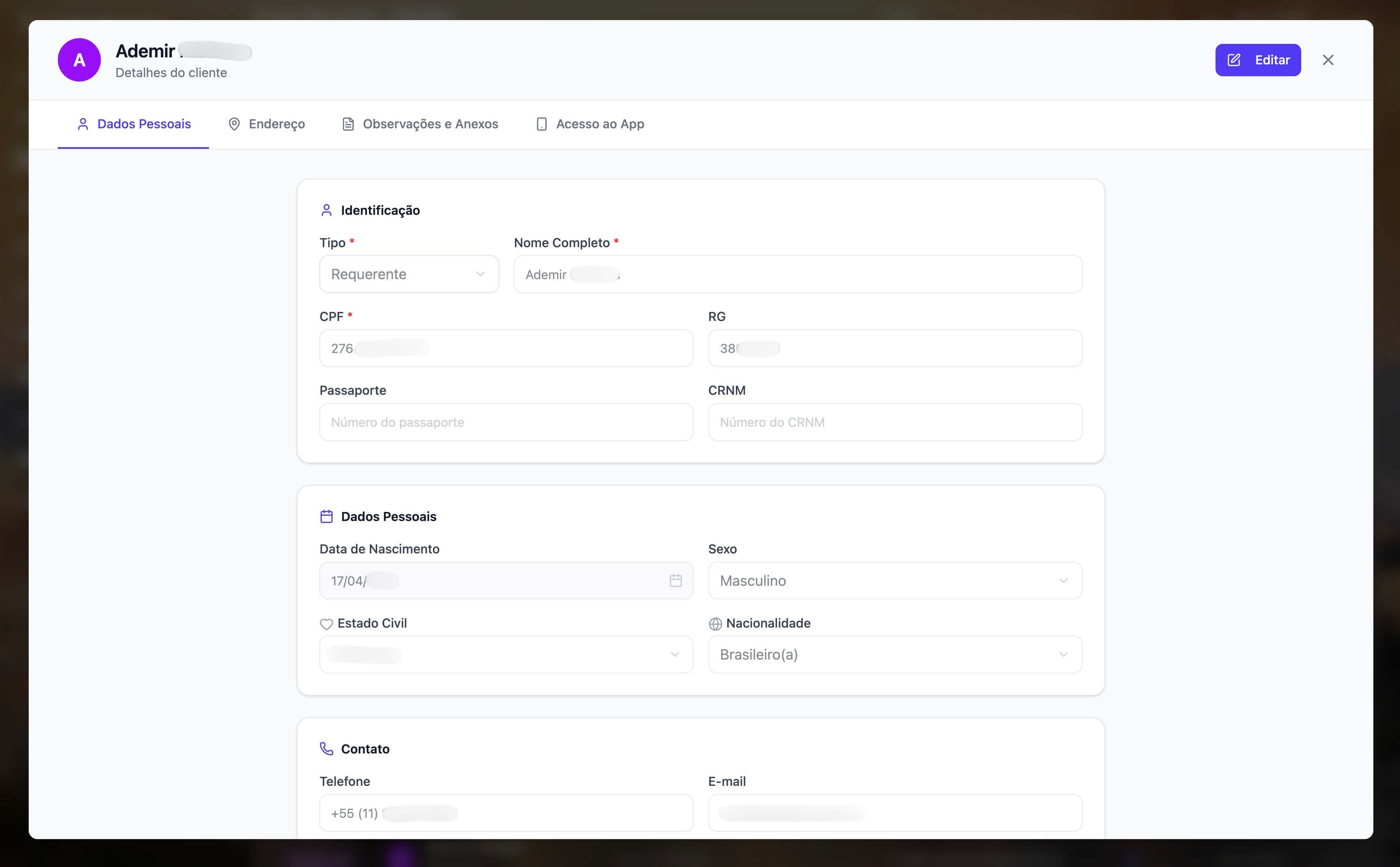
Some data exists at a larger scale than a single process. The clients area maintains the central registry of every person served — multiple processes can belong to the same client, and the system knows it.
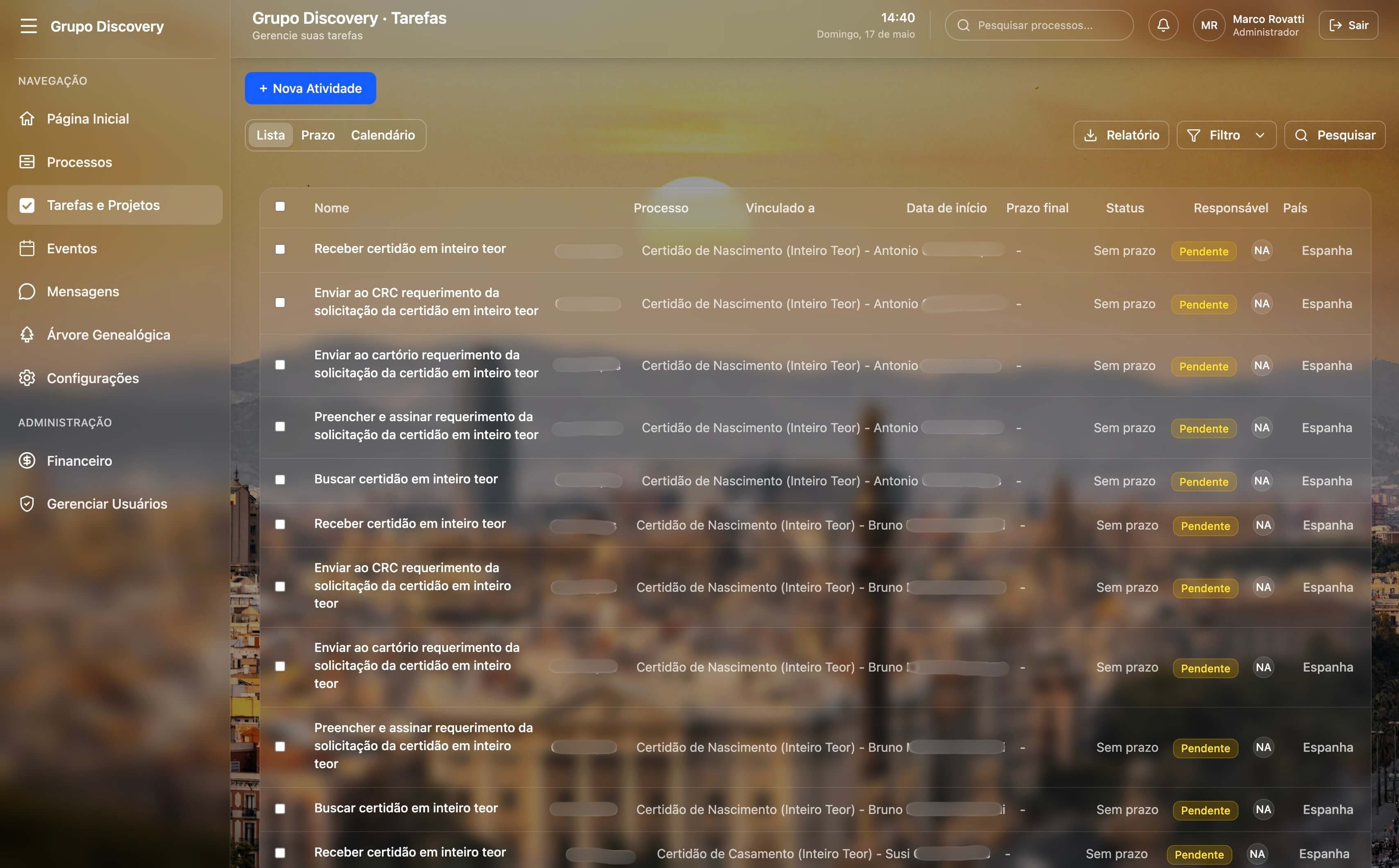
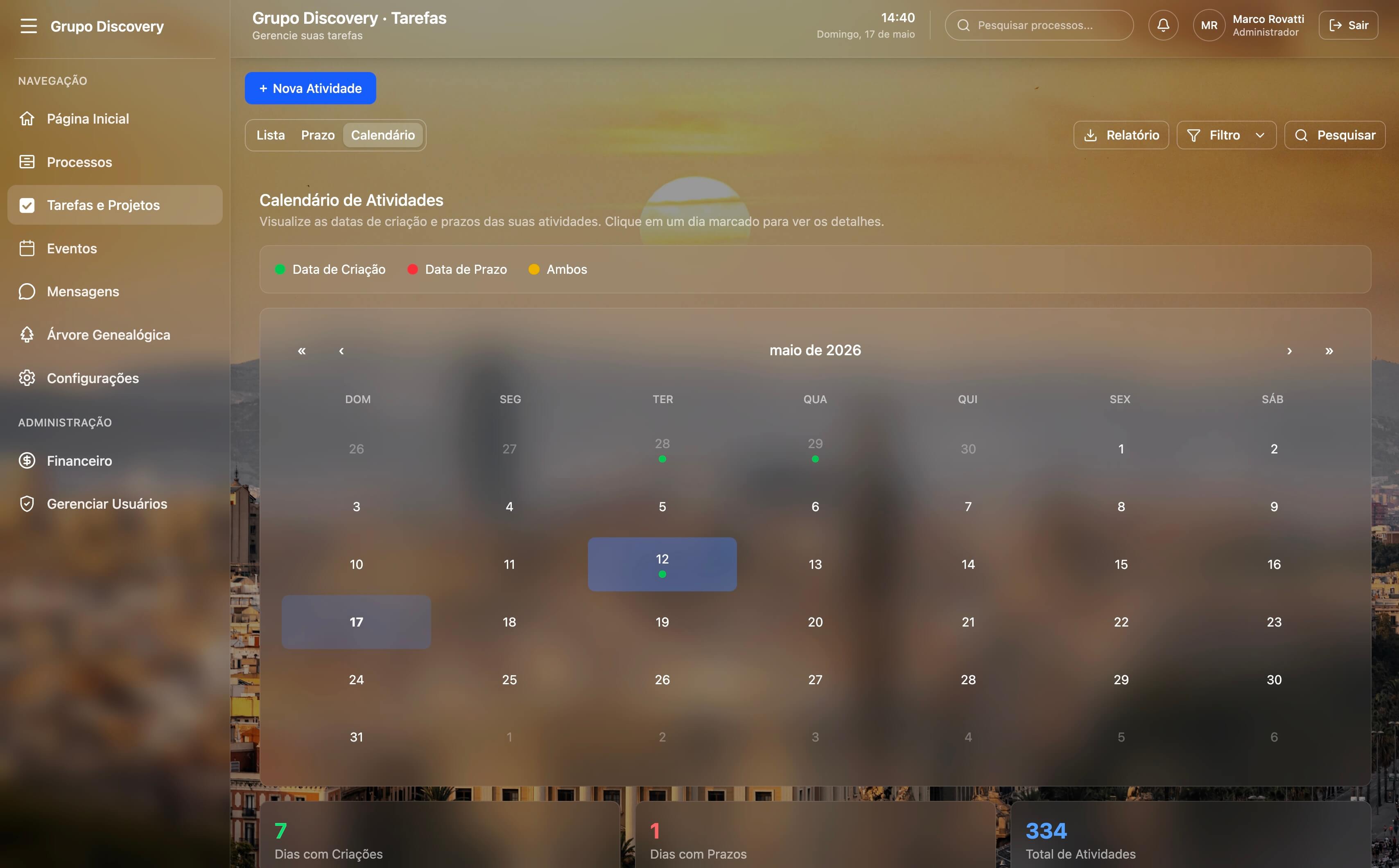
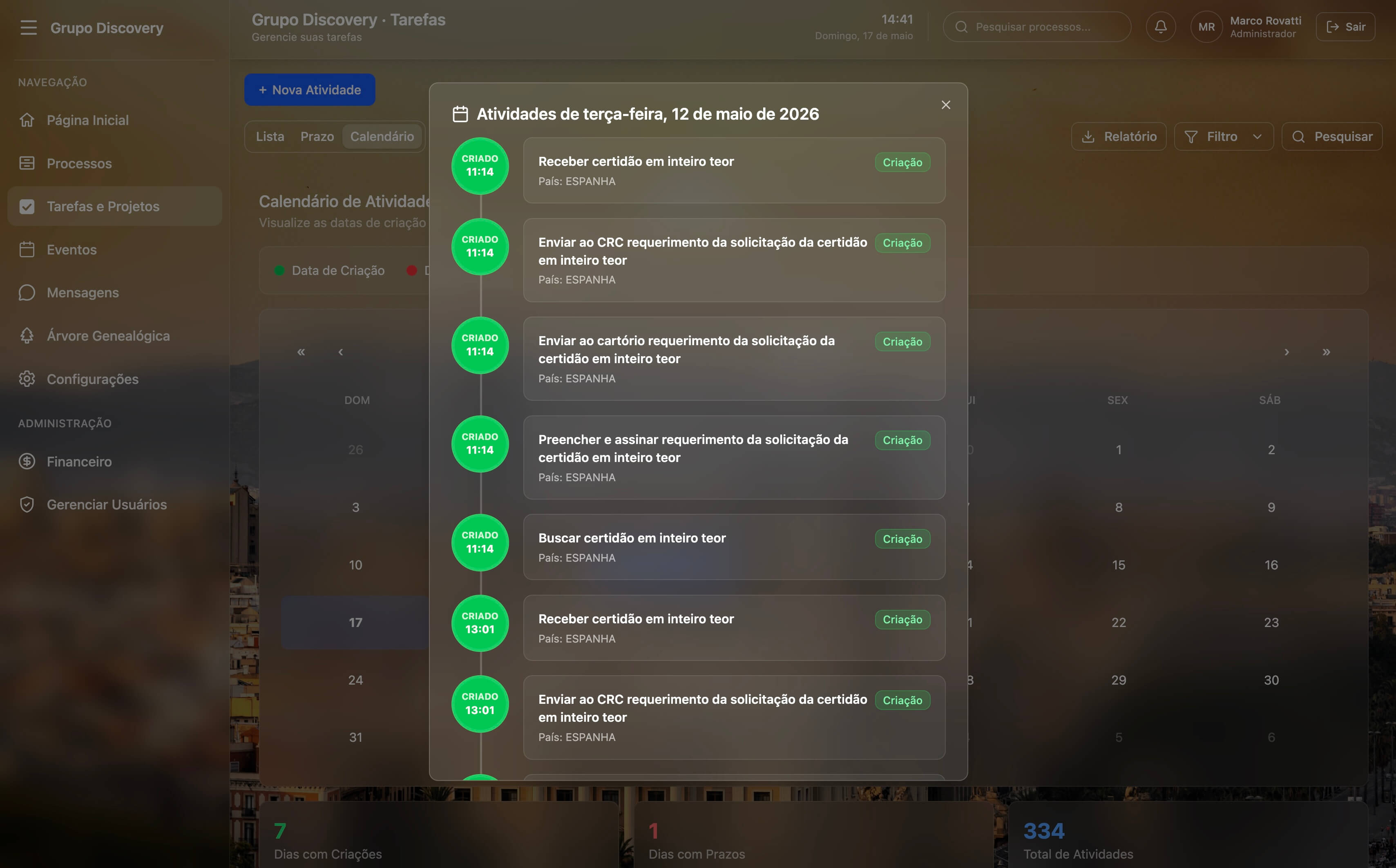
Activities and calendar operate at the team scale. Who's doing what, on which day, with what priority. List view when you want density, calendar view when you want rhythm.
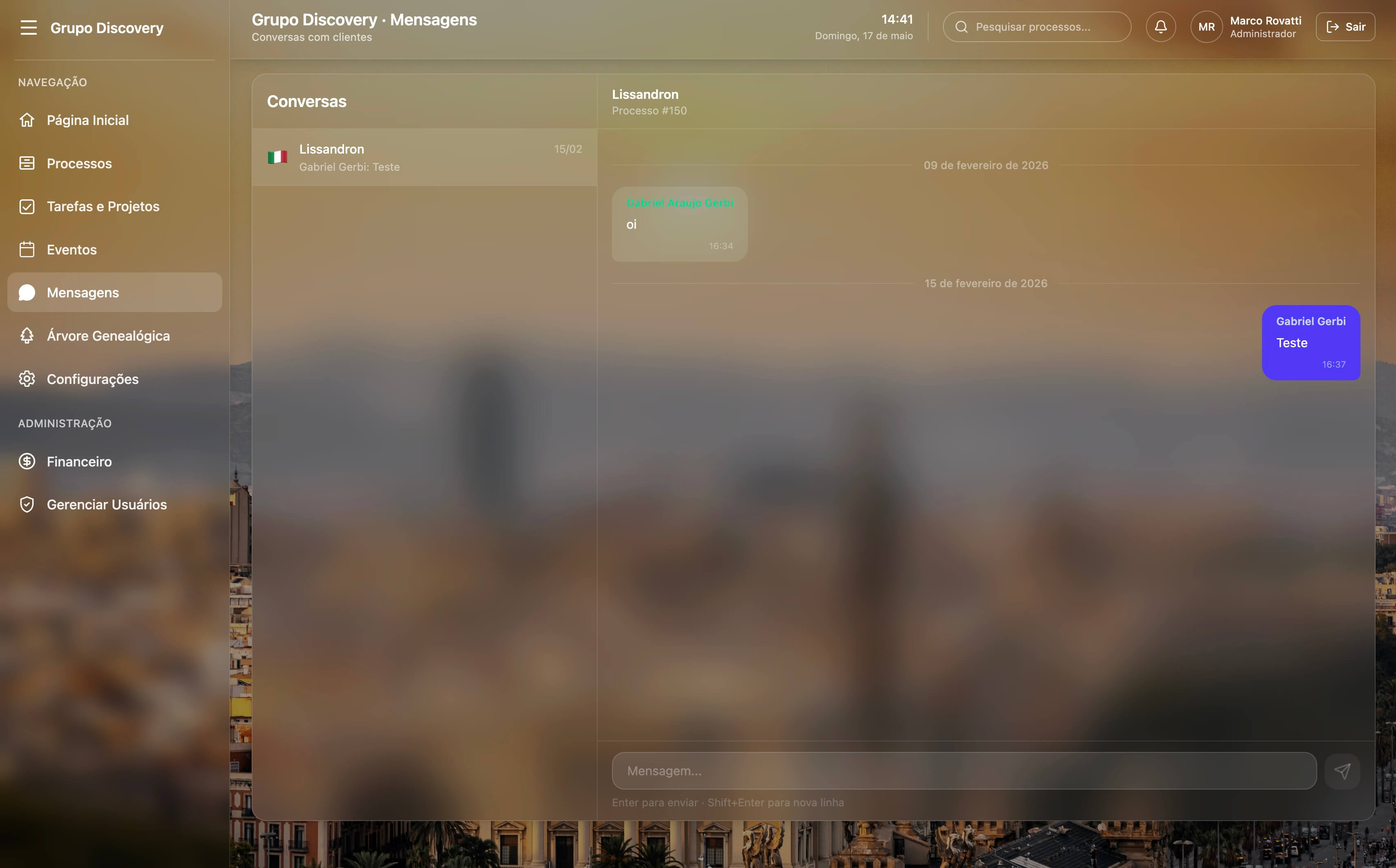
Internal messaging replaces the parallel WhatsApp groups. The subject lives tied to the process, the client, the document — not in some thread lost on a phone.
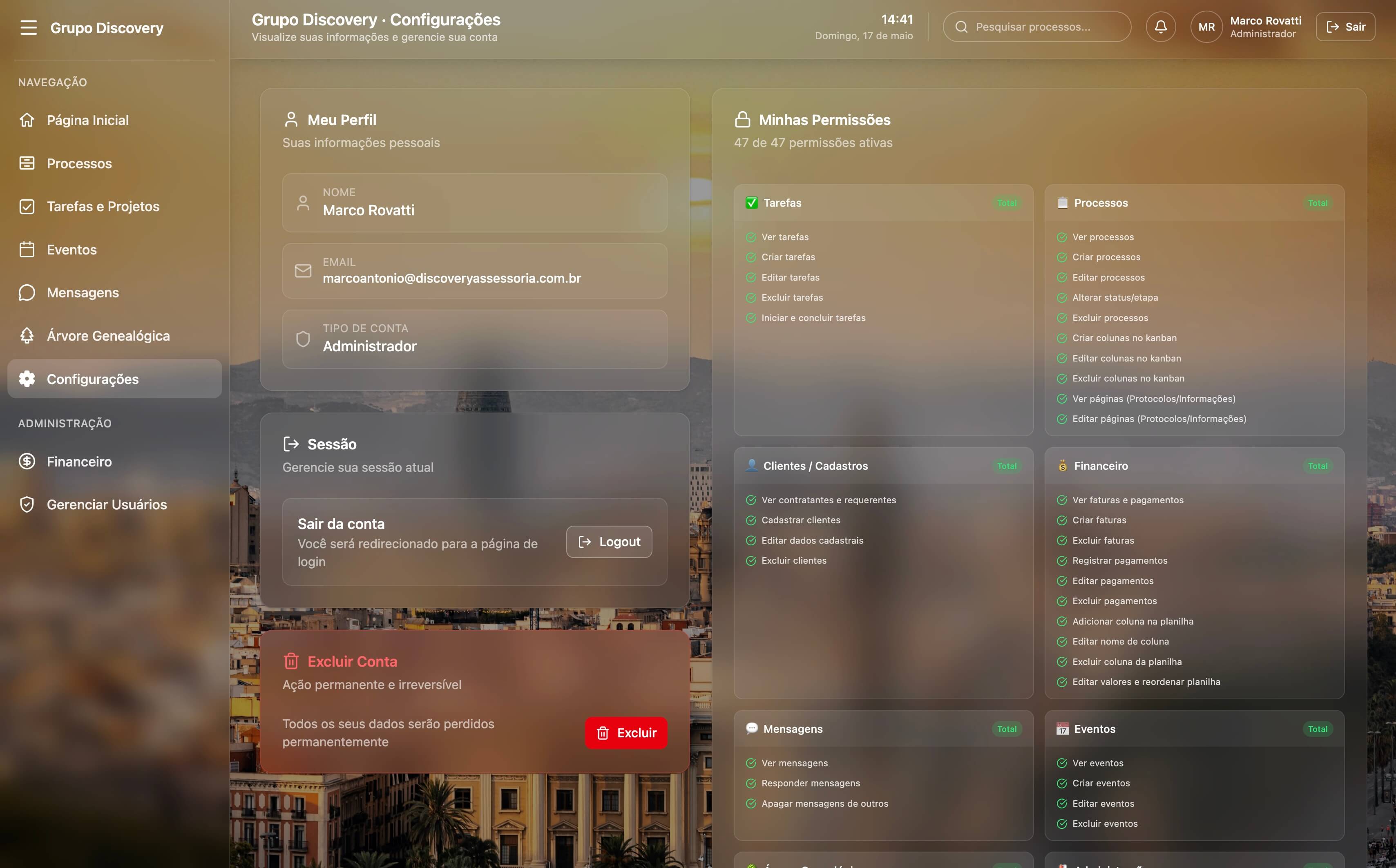
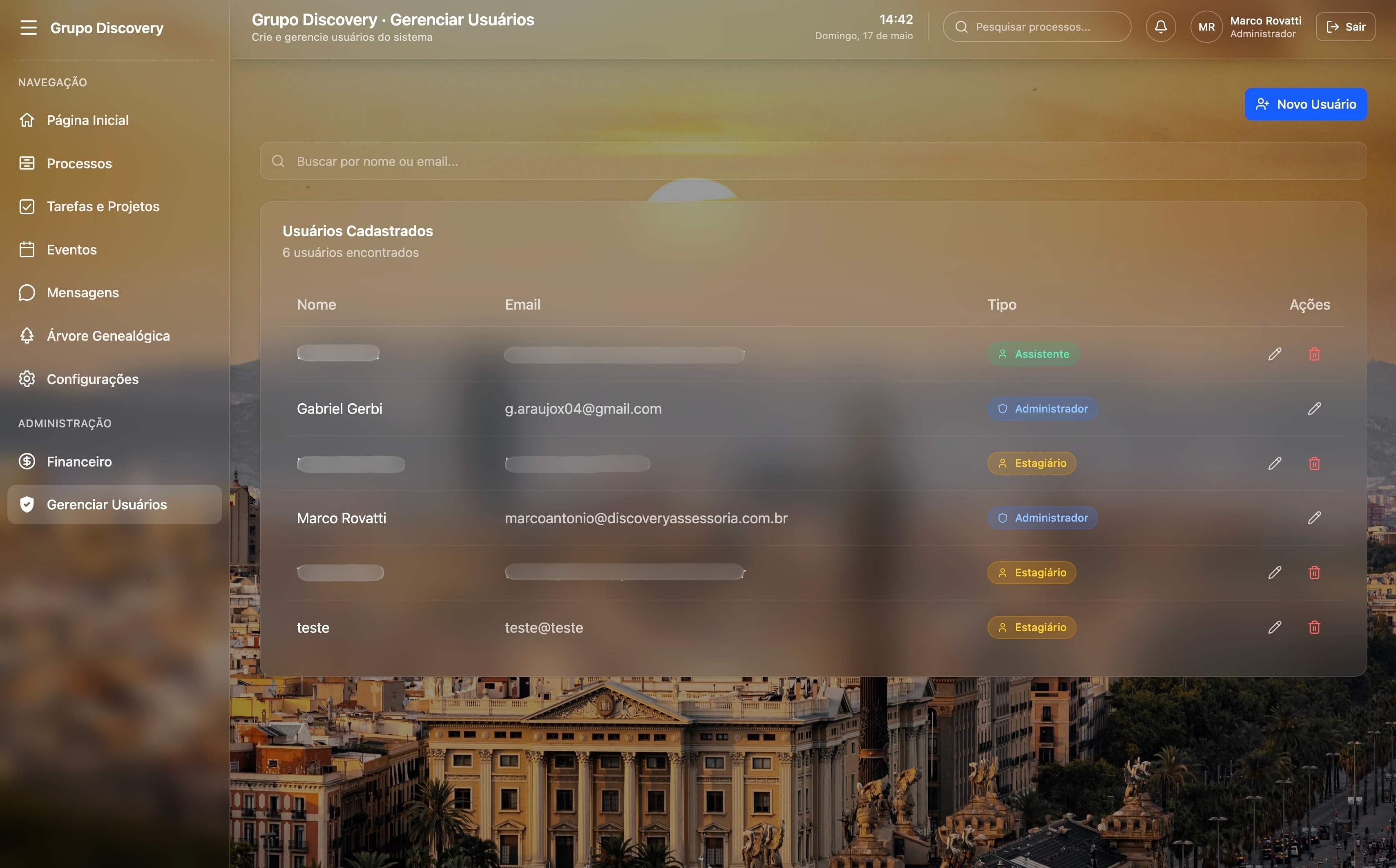
Some features call for their own stage. The genealogy page, with cross-search across all registered trees. The global financial page, with the Delinquency Center and a consolidated view of all operations across currencies. Settings and user management close the set.

A system designed by real use, built in daily proximity to those who use it. Not off-the-shelf software adapted to a client — it's Discovery's operation, described in code.