From a February phone call to an editorial fundraising piece.
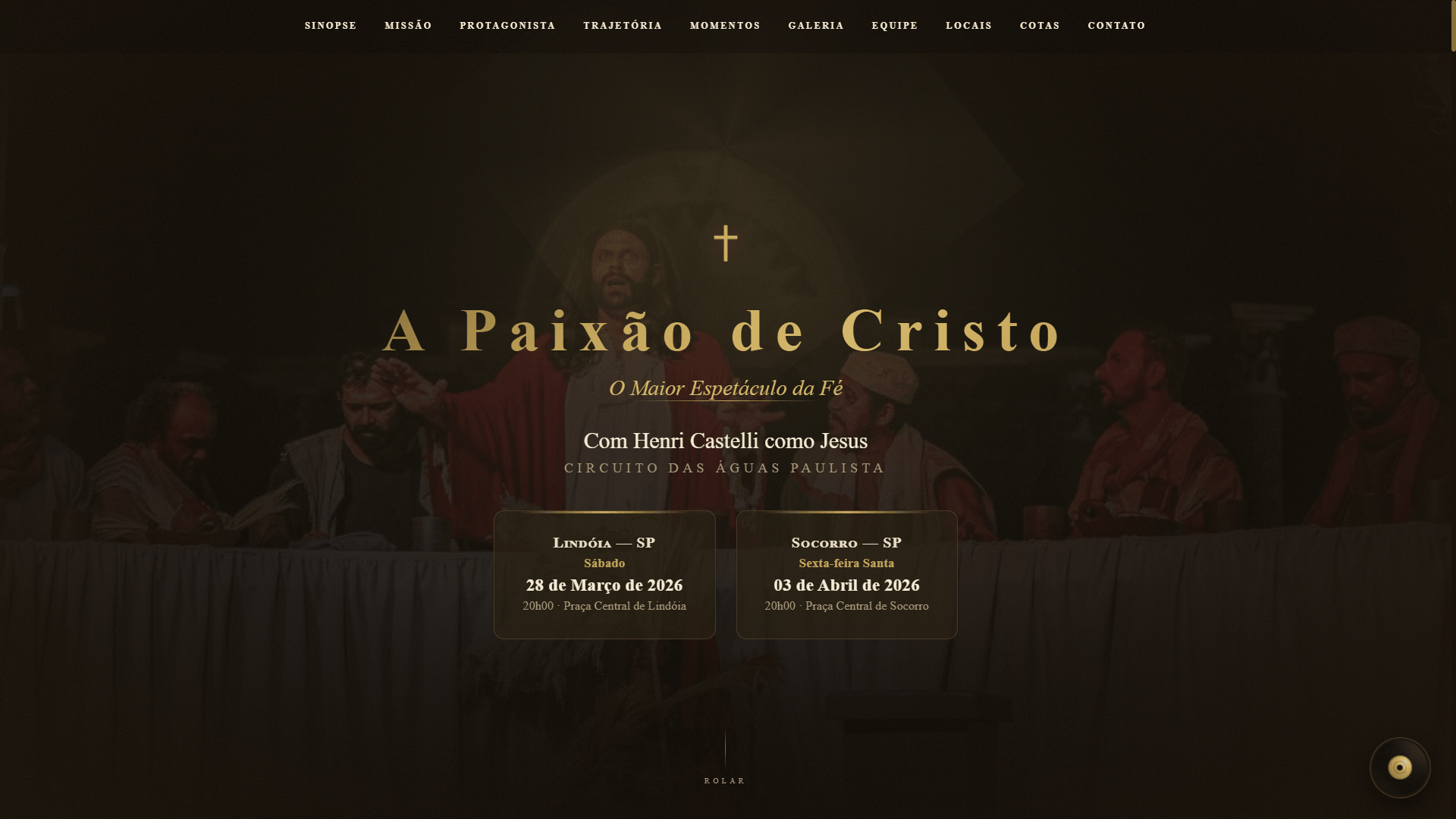
In 2026, the Circuito das Águas Paulista region hosts two stagings of the Passion of Christ. Lindóia on March 28, Socorro on April 3, with Henri Castelli in the lead role. Estimated combined in-person audience of one hundred thousand.
Before the site, the project existed in conversation, Henri's slide decks, sponsorship tiers in a spreadsheet, and dates in WhatsApp messages. Marco coordinated sponsors and municipalities with scattered material. What was missing was the single document capable of defending the proposal with editorial weight.
The site was born as a fundraising piece. It's not a landing page to sell tickets — the event is free. It's a calling card for municipalities, sponsors, and press. The job is to convince before the phone call happens.
February 2026. A mayor from the Circuito das Águas Paulista region calls Marco to discuss a Passion of Christ staging. Marco listens and sees something bigger. Henri Castelli, his friend, has played Jesus for years in events across the country. What if it weren't a single city, but the entire Circuito? What if the region positioned itself as the São Paulo state capital of the Passion? The idea existed in conversation. What was missing was the document that would defend it.
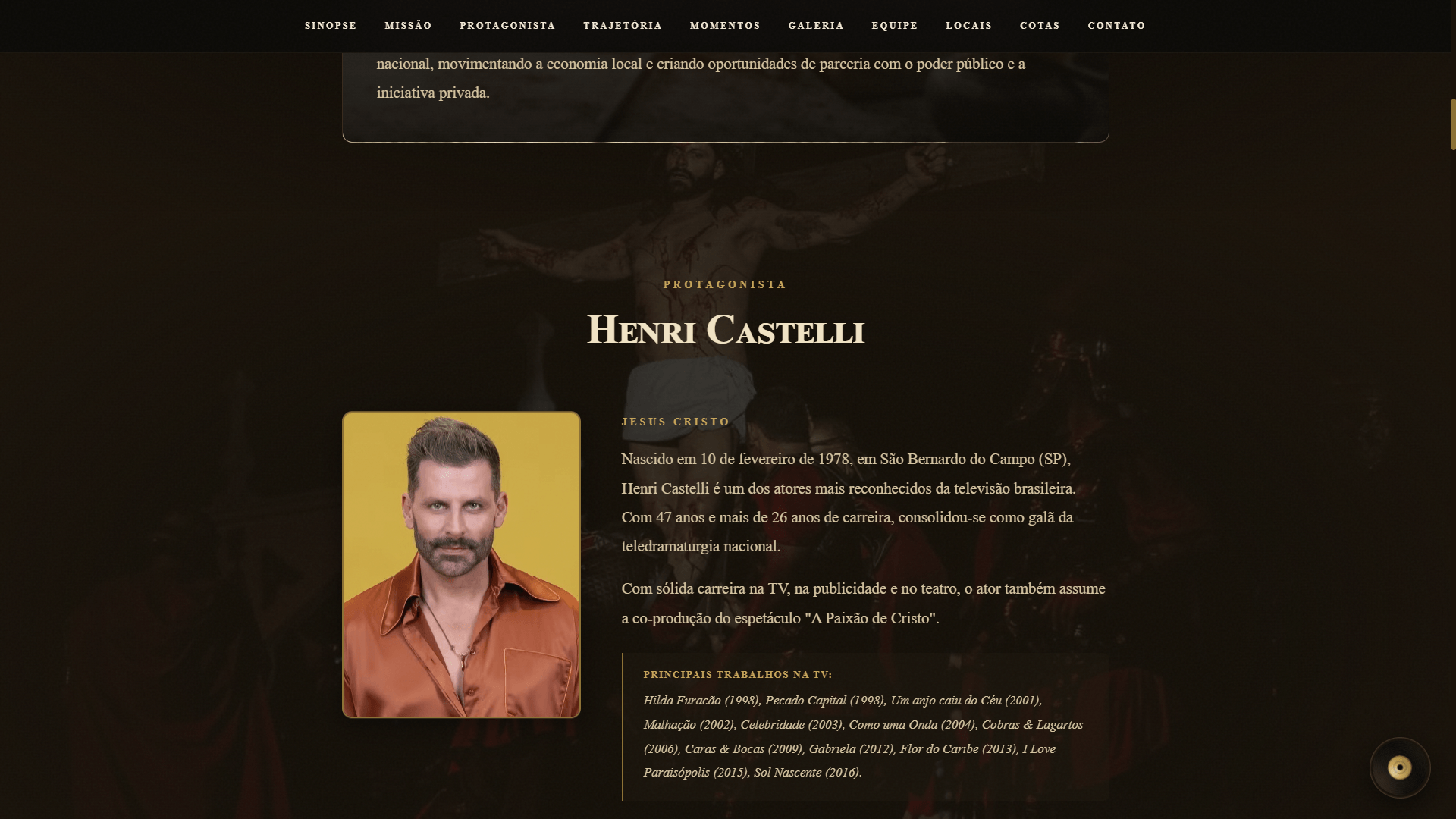
Henri Castelli is one of the most recognizable actors on Brazilian television. More than two decades in soap operas — leading roles in Pecado Capital, Celebridade, I Love Paraisópolis. In 2025 he starred in Pacatuba, Ceará, in the largest Passion of Christ in the Northeast, with an estimated audience of forty thousand. The anchor that makes a mayor, a sponsor, or a journalist stop and listen.
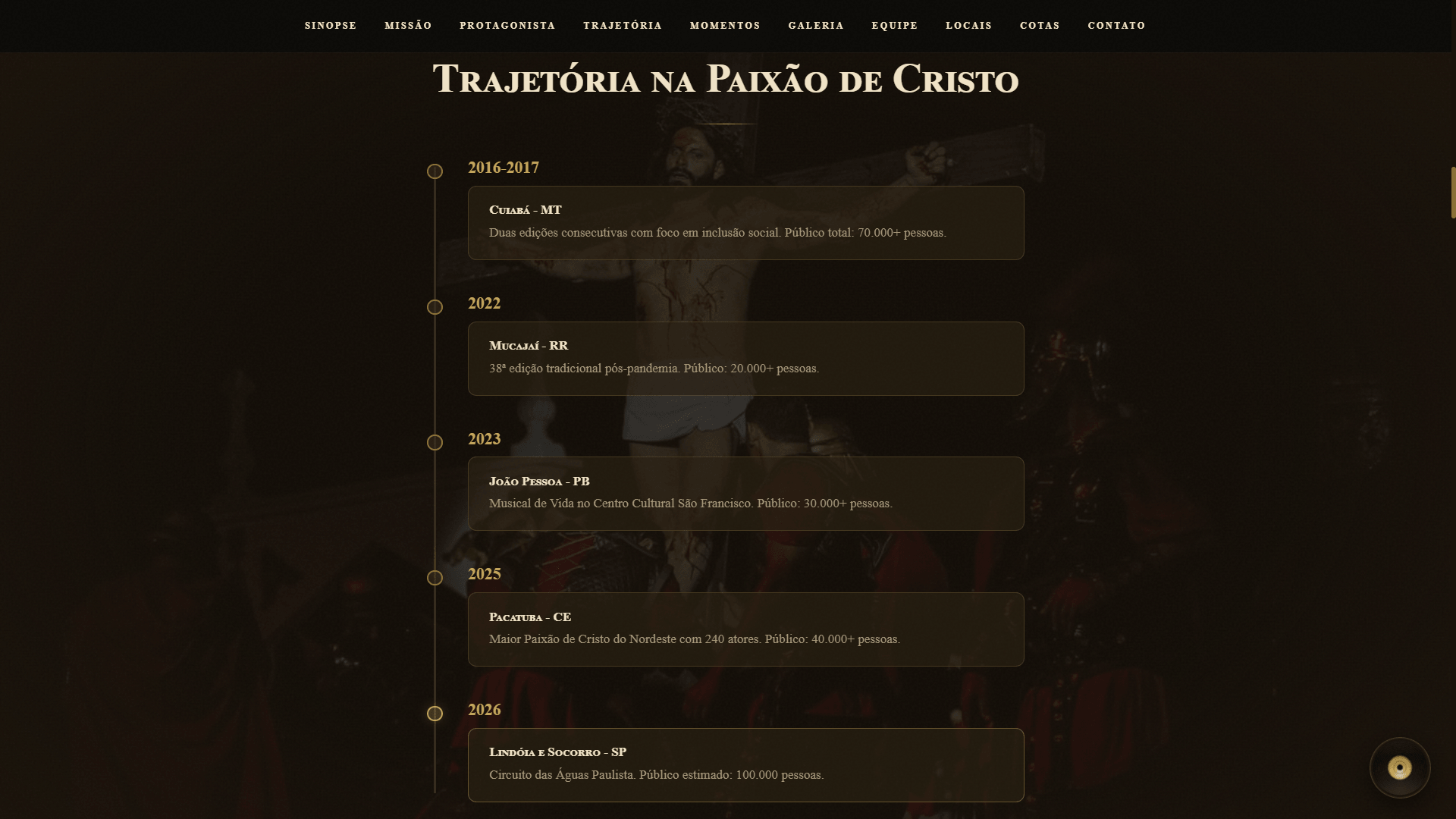
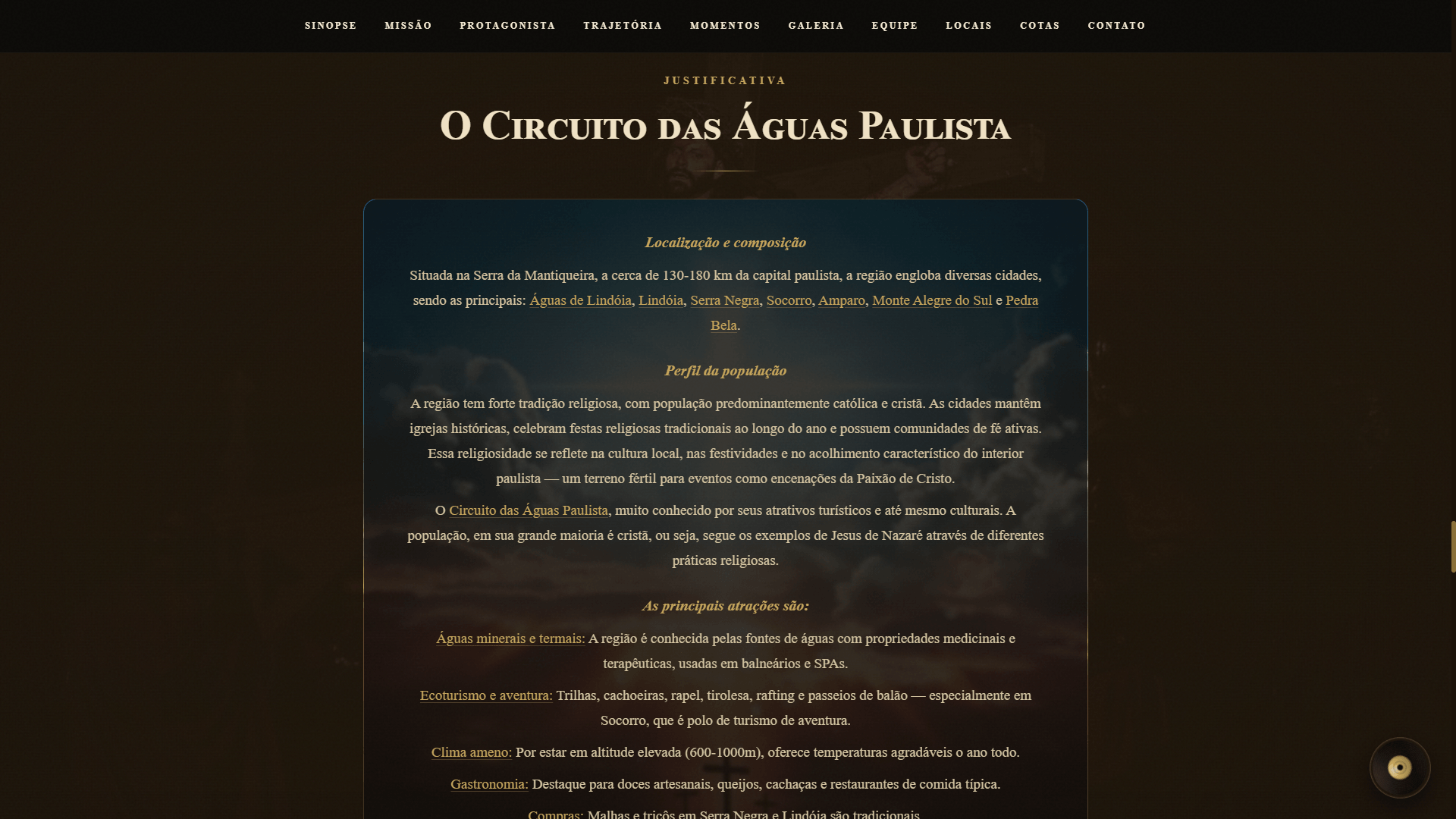
The site is not a landing page. It is an editorial dossier. Visitors don't see a "buy ticket" button — they see a document defending the project. It opens with the production synopsis. Then the regional cultural justification: religious tradition, tourism profile, active faith communities. The piece answers the municipality's question before it is asked.
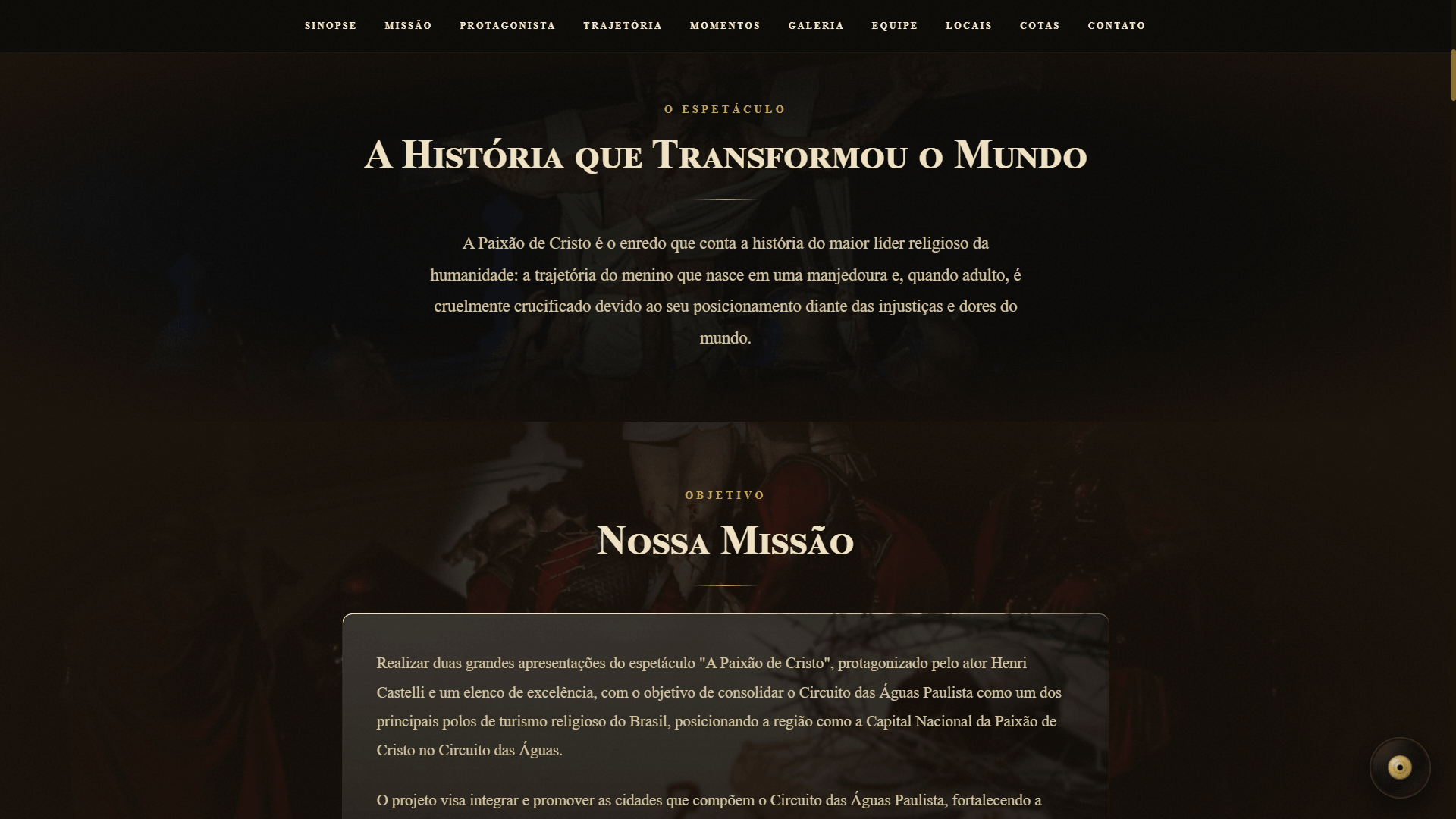
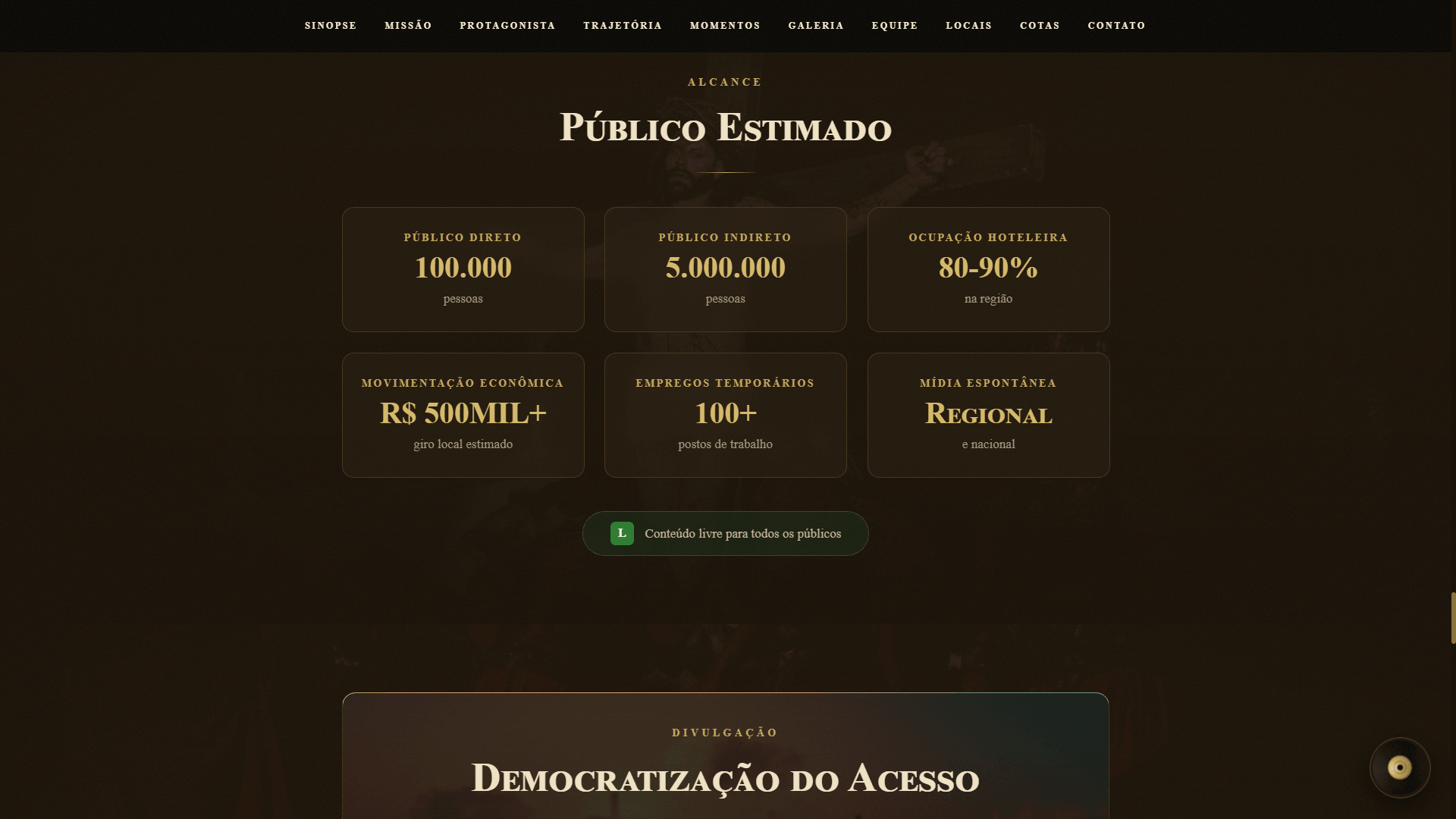
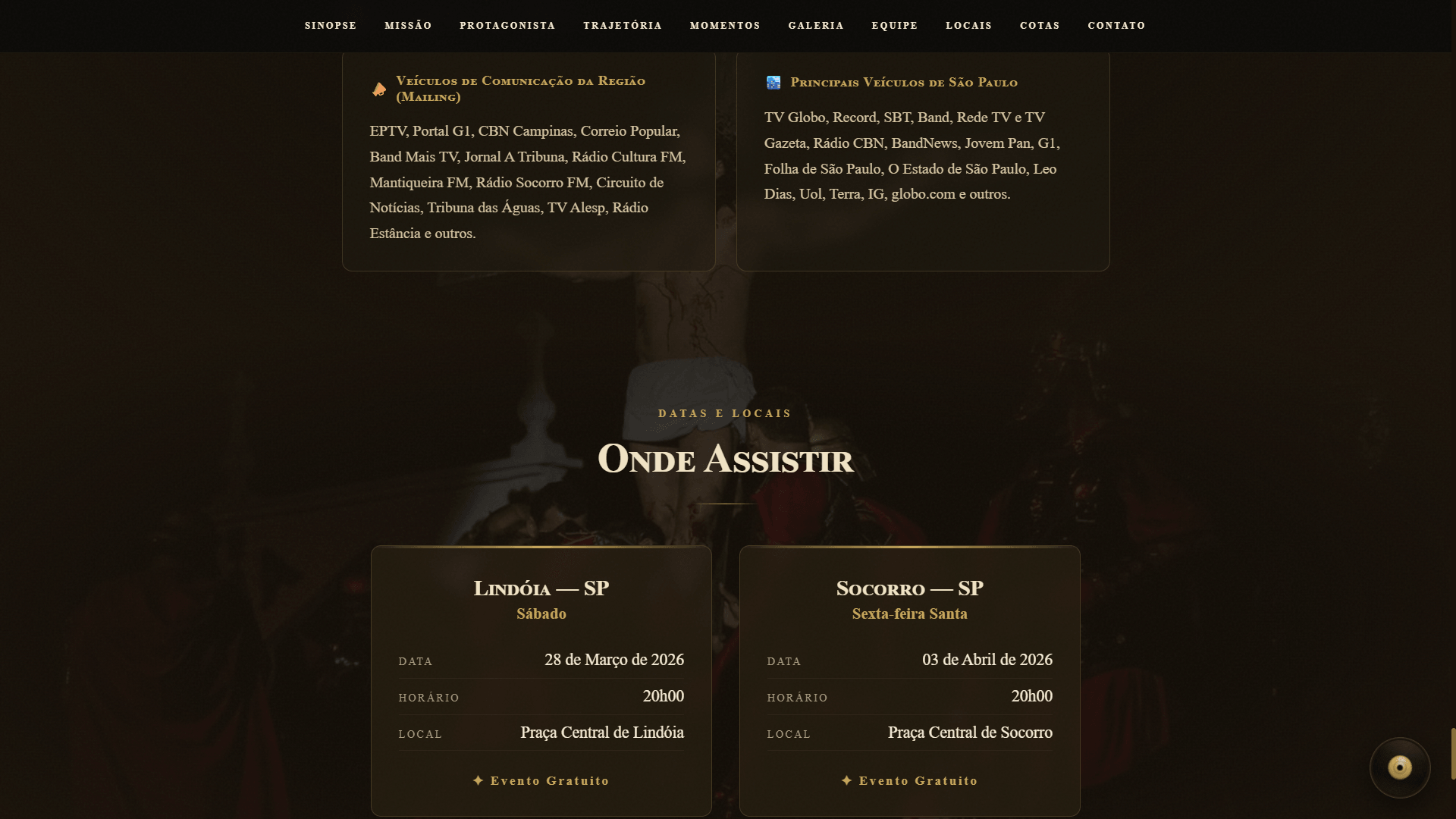
The second block speaks to sponsor and press. Projection of one hundred thousand in-person attendees and five million in regional and national media reach. Three sponsorship tiers — bronze, silver, supreme — with escalating benefits from outdoor exposure to publication on Henri Castelli's social channels. Whoever reaches the end has the material to close.

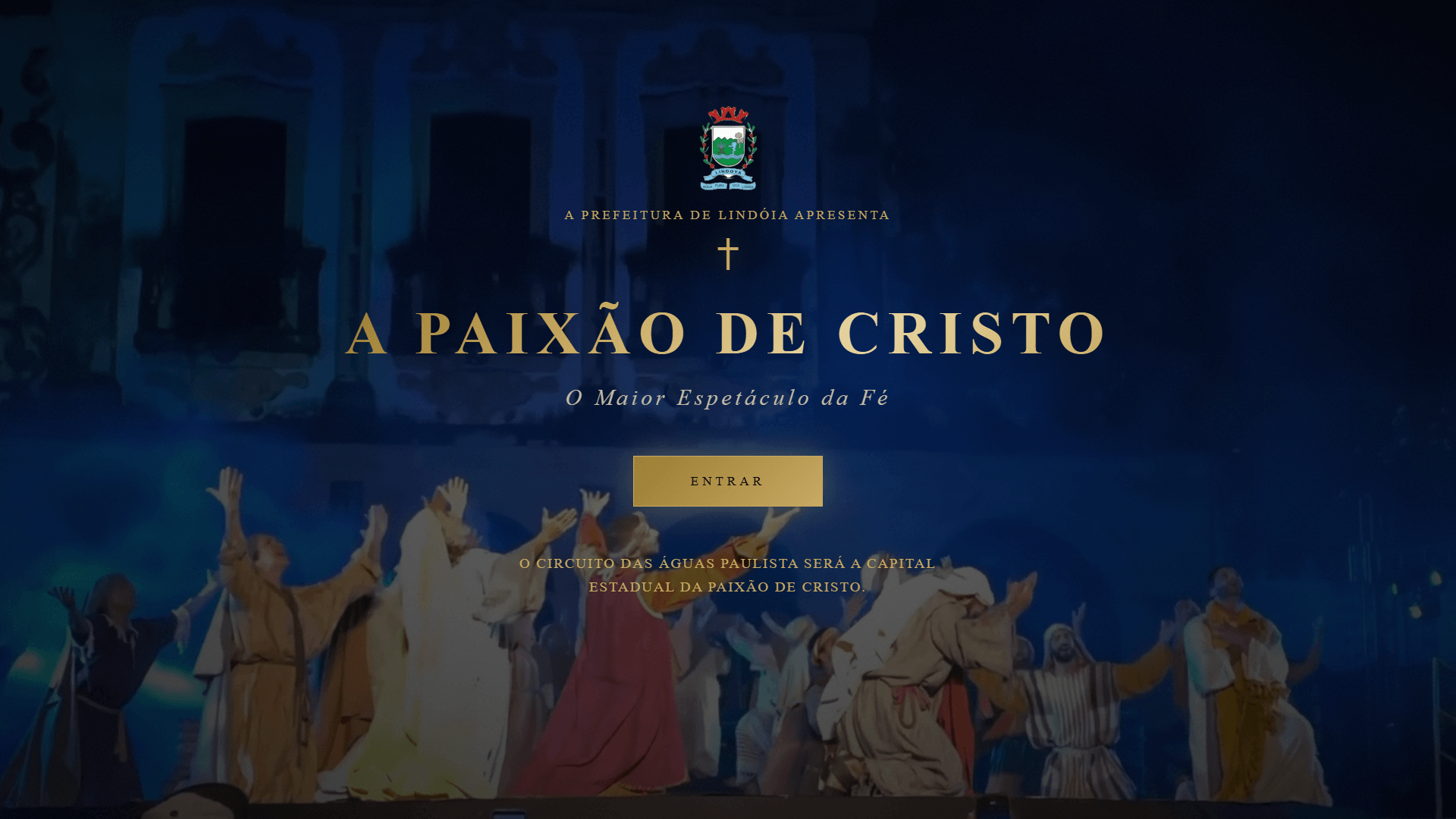
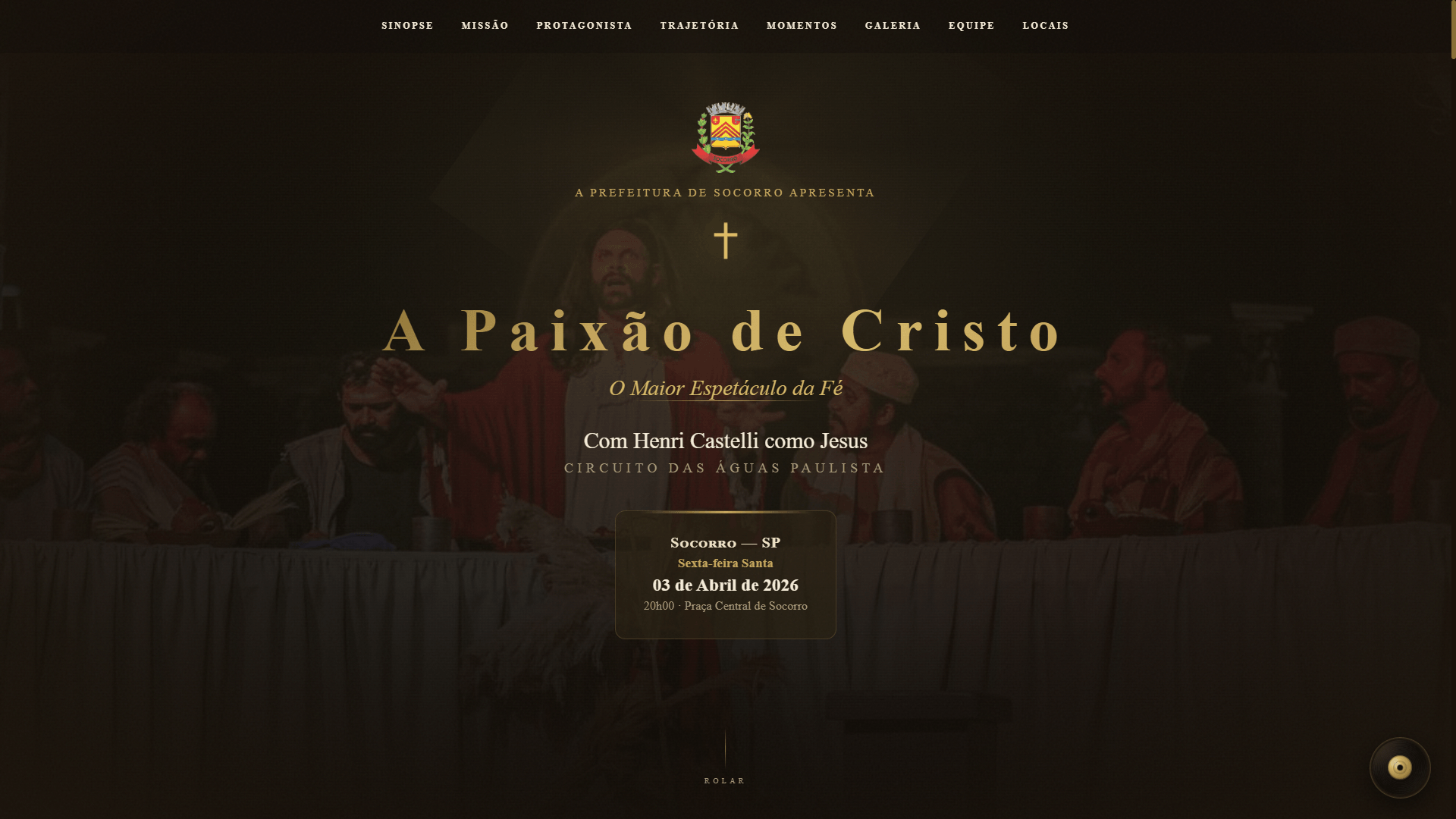
Black over gold, Cinzel Decorative and Cormorant Garamond. The intro opens with a pulsing cross, the city's coat of arms, and footage of the production running in the background. Not a parish leaflet. Editorial magazine — references closer to a theatrical gala cover than to an Easter program. The aesthetic builds expectation before the copy starts to sell.
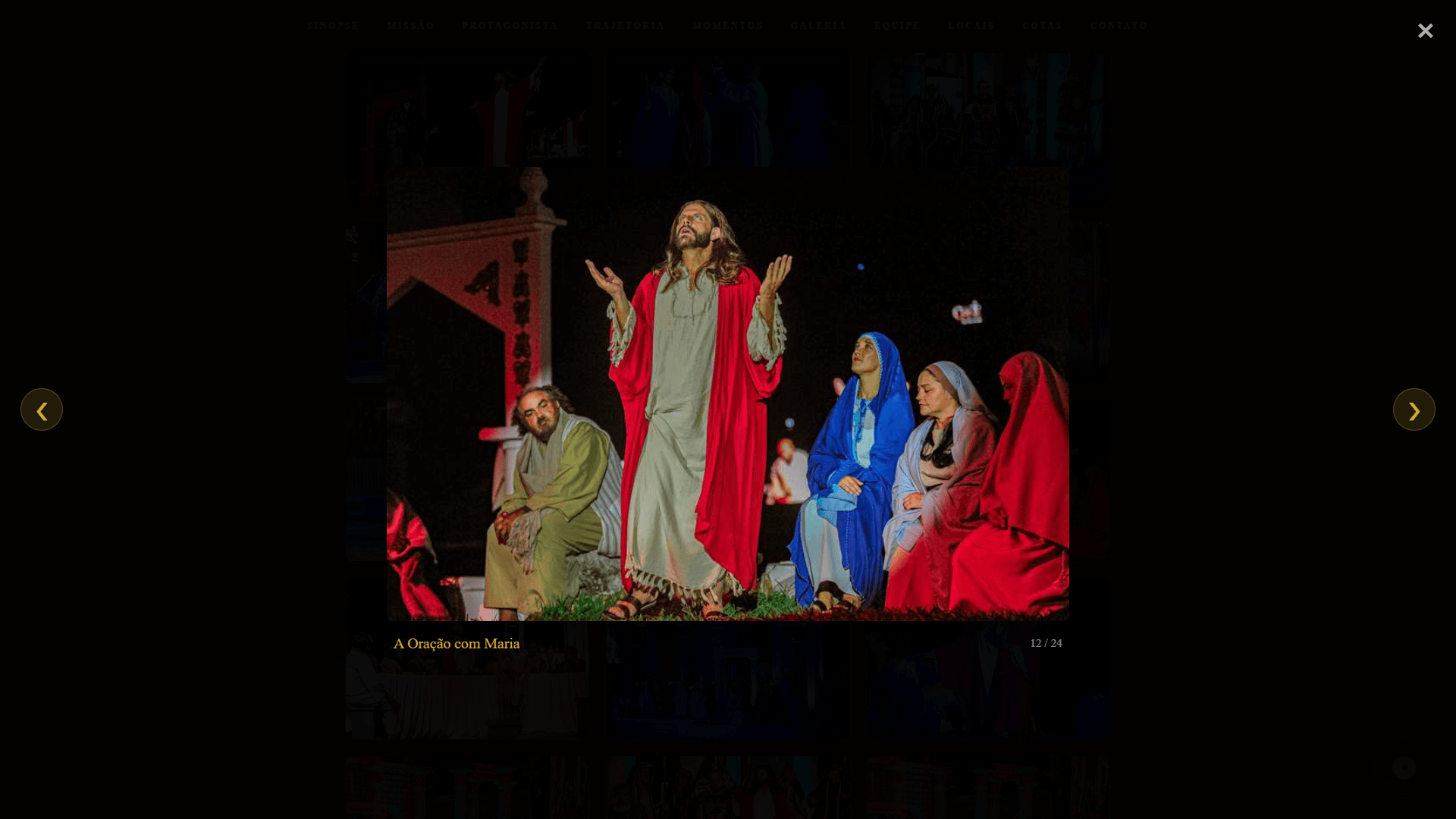
The details carry weight. A gallery of twenty-four curated photos with custom captions per image. A small vinyl record in the bottom right corner that pauses the soundtrack. A slow fade between intro and hero. Things nobody sees in a screenshot. They work in use — they make the site remembered the next day.
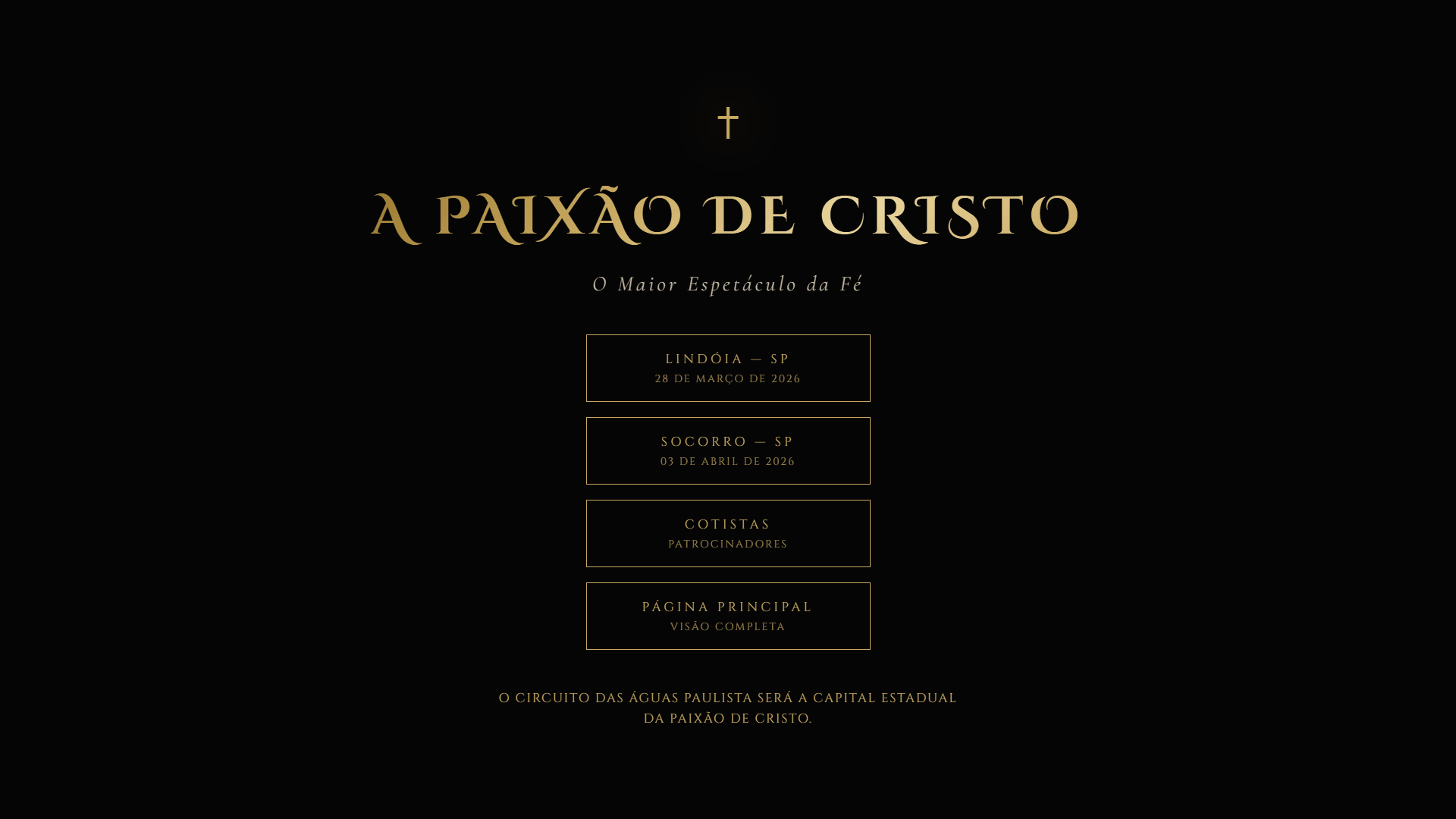
ChoicePage with four routes: Lindóia, Socorro, Sponsors, Main. Each city opens with its own coat of arms and "The City Hall of [X] presents" — a regionalized version the municipality can use as an official piece. The city sees only its date, its venue, its narrative. The city hall receives a site that seems custom-made for it. Because it was.
Sponsors see everything: both cities, sponsorship tiers, commercial contact. Main shows the two cities together, intended for press wanting to cover the region as a whole. Same base, different materials for each audience. Four routes, four versions of the same proposal.
A site doesn't sell an event — it sells a version of the region. The Passion of Christ had to stop being a one-off staging and become a regional project. That was the brief: document the proposal with enough detail for municipalities, sponsors, and press to see what didn't yet exist.